
 Water Damage
The September 2 storm turned Vaughan streets into rivers and put dozens of vehicles under water. Here is what happened, why Vaughan floods the way it does, and the order to work in when the water is already inside.
In This Article
What happened in Vaughan on September 2
On the afternoon of Wednesday, September 2, 2026, Environment Canada issued a red warning for an extremely dangerous thunderstorm and pushed an emergency alert to phones across the Greater Toronto Area. The cell that produced it tracked directly over Vaughan before moving east at roughly 55 km/h.
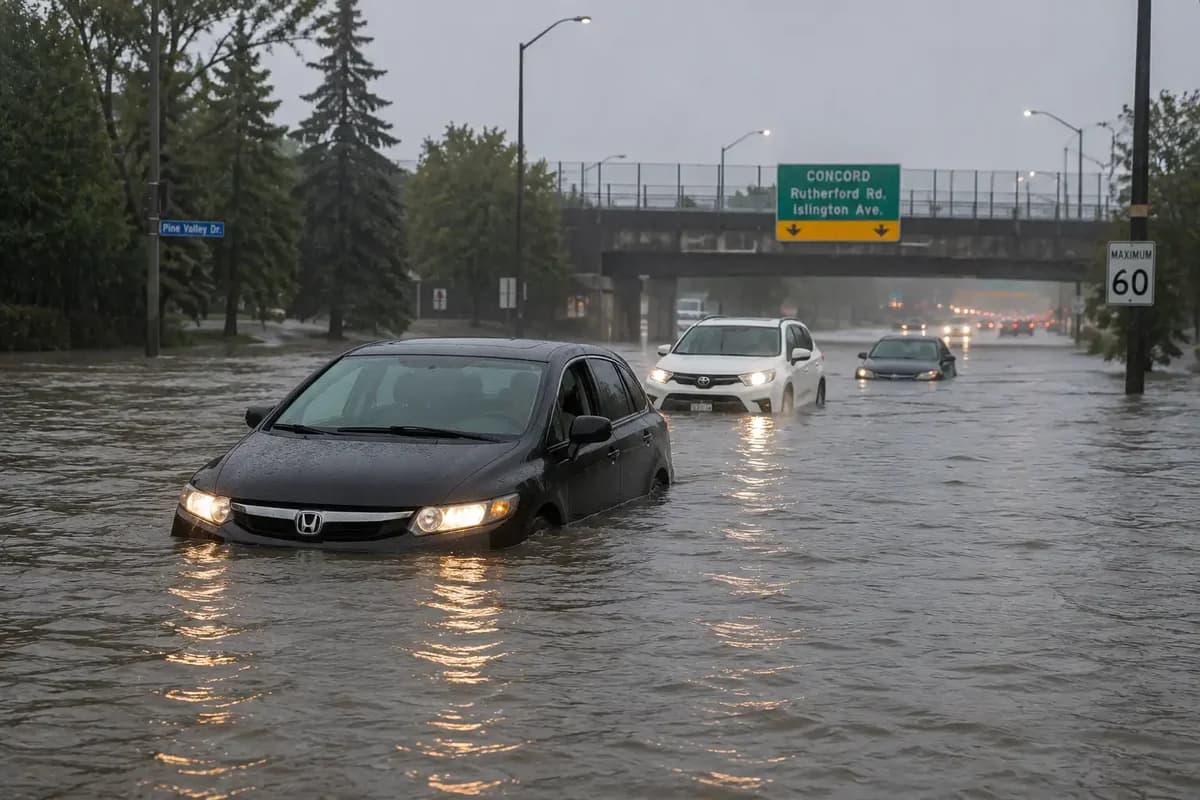
The most striking damage was at Rivermede Road and Bowes Road in Concord, where an industrial stretch filled fast enough that dozens of cars, trucks, and transit buses ended up partly submerged. Vaughan Fire and Rescue Service pulled people out of vehicles, including children. Elsewhere the same system flooded Highway 404 near the Steeles Avenue on-ramp, closed the Don Valley Parkway in both directions, and knocked out power to around 65,000 Toronto Hydro customers at its peak, with 45,000 still dark at 8 p.m.
The Toronto and Region Conservation Authority recorded up to 59 mm of rain in some watersheds. The number that actually matters, though, is the rate. Environment Canada was forecasting intensities above 30 to 50 mm in a single hour. That is the threshold where storm sewers stop keeping up, and it is the reason water ended up in Vaughan basements that had never taken water before.
Why Vaughan floods the way it does
Vaughan is not one flood risk, it is four overlapping ones, and they do not affect the same properties. A Kleinburg century home, a Vellore subdivision built in 2004, and a tower at the Vaughan Metropolitan Centre fail in completely different ways during the same storm.
The Humber River and Woodbridge
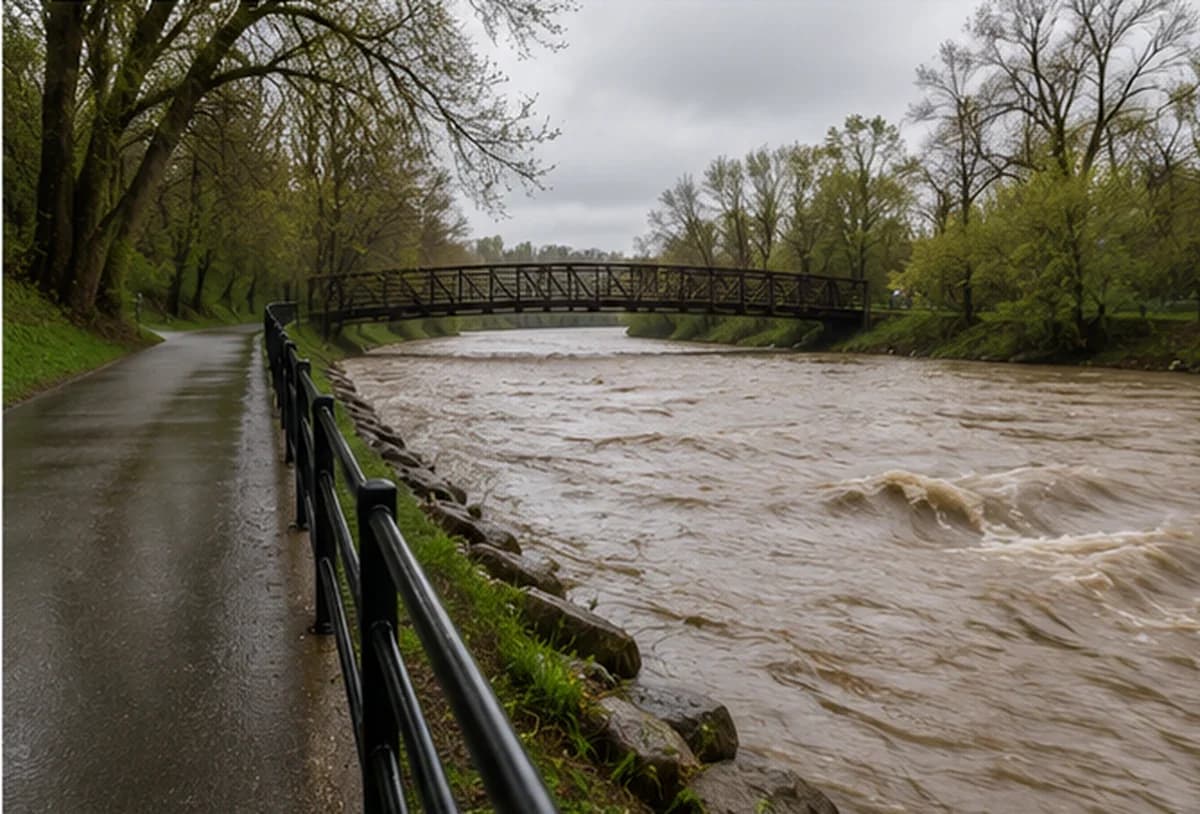
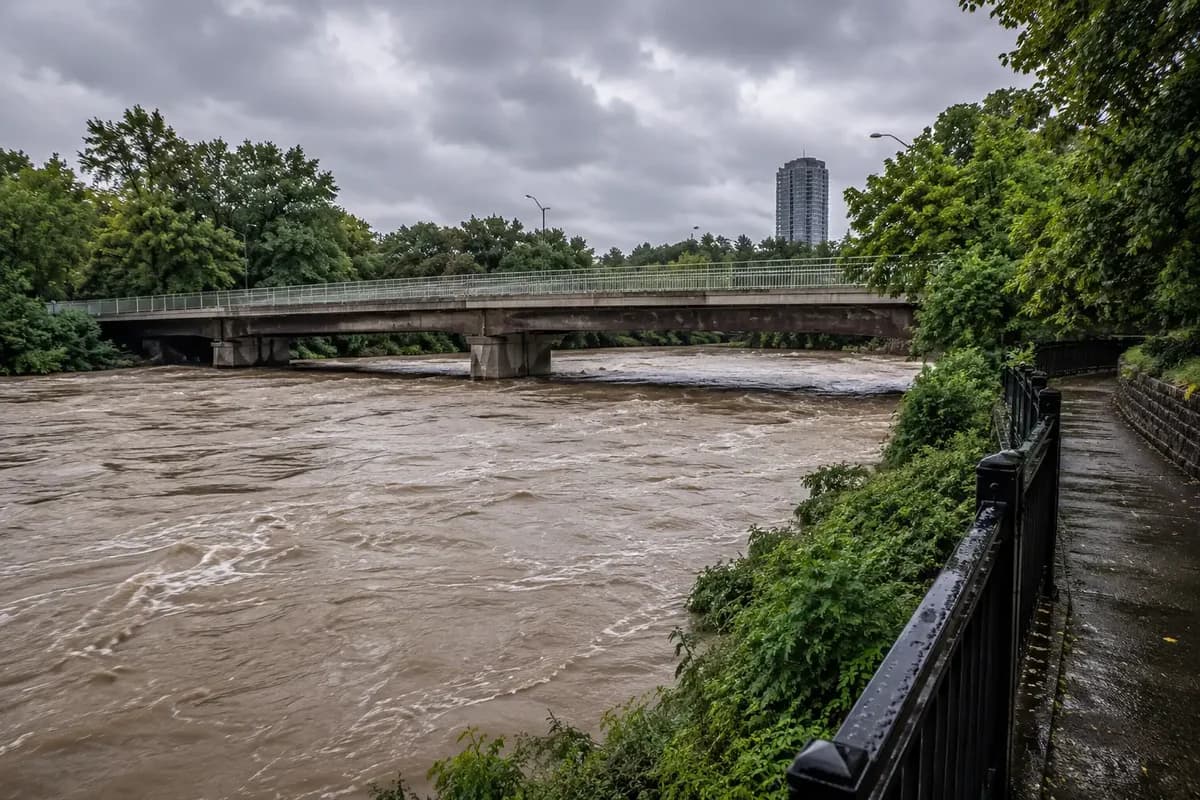
Woodbridge sits on the Humber, and the Humber has the worst flood record in the region. On October 15 and 16, 1954, Hurricane Hazel dropped more than 200 mm of rain in 24 hours with winds around 124 km/h. In Woodbridge the Humber swelled to 107 metres across at its narrowest point, nine people were killed, and several hundred were left homeless. Ontario's death toll reached 81.
What followed is why Woodbridge looks the way it does now. Development was pushed back out of the Humber floodplain and Ontario built the conservation authority system that still regulates it. The Toronto and Region Conservation Authority maps that regulated floodplain today, and it is worth knowing which side of the line a property sits on before buying in Woodbridge or finishing a basement there.
Flash flooding on flat, hard ground
This is what caught Concord on September 2. Vaughan's employment lands are flat, heavily paved, and drained by catch basins sized for ordinary rain. When 30 to 50 mm arrives in an hour, the water has nowhere to infiltrate and it moves sideways until it finds the lowest point. Rivermede and Bowes is that low point.
The same physics applies to residential streets with a lot of hard surface and limited grading. It does not need a river nearby, and it can happen on a property that has been dry for twenty years.
Sewer surcharge in older and newer areas alike
During an intense downpour the sanitary sewer can surcharge, and when it does the easiest path for that water is back up the lateral into your basement, arriving through the floor drain. This is the single most common cause of Vaughan basement flooding we respond to, and it is the one people most often mistake for a foundation problem because there is no visible entry point on the walls.
Fast-built subdivisions and VMC towers
Much of Maple, Vellore, and Thornhill went up quickly, with finished basements as standard. A finished basement converts a manageable loss into an expensive one, because drywall, underpad, and insulation all absorb water that a bare basement would simply shed.
The Vaughan Metropolitan Centre is a different problem again. In a tower, one failure travels vertically through a dozen units and the split between unit owner, condo corporation, and their respective insurers gets complicated immediately. Speed matters even more there, because the water is spreading horizontally through the building at the same time it is going down.
Where the water came from, and why it changes the job
Before anything else gets decided, the pathway has to be identified, because it sets the water category. The category is what determines whether materials can be dried in place or have to come out, and it is not a judgment call.
| Pathway | Where it shows up in Vaughan | Water category |
|---|---|---|
| Sewer and drain backup | Anywhere in the city, arriving up through the basement floor drain during heavy rain | Category 3, grossly contaminated |
| Overland flooding | Low-lying ground and paved employment lands such as Concord, plus properties near the Humber in Woodbridge | Category 3, grossly contaminated |
| Surface water and grading | Over window wells, through basement walkouts, and down exterior stairwells | Category 2, deteriorating with time |
| Plumbing and appliance failure | Any property, any season, unrelated to the storm | Category 1 if caught fast |
Why sewer water is not a shop-vac job
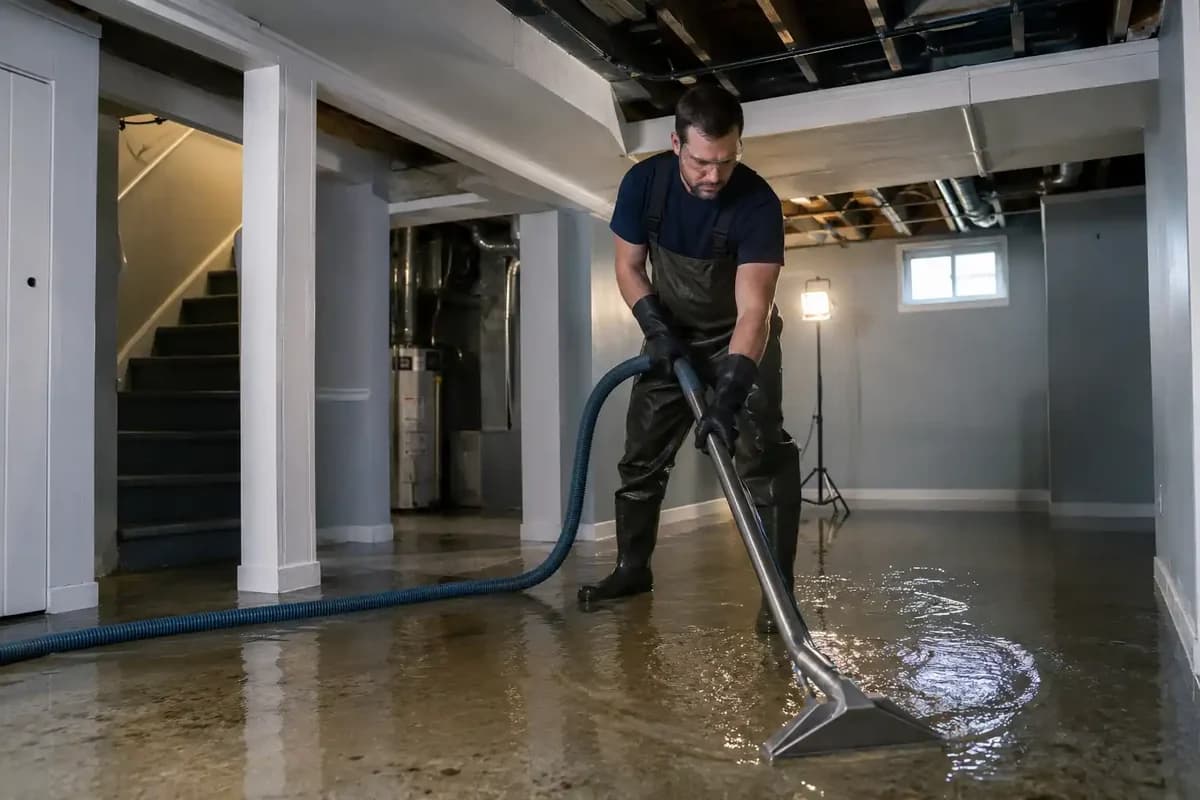
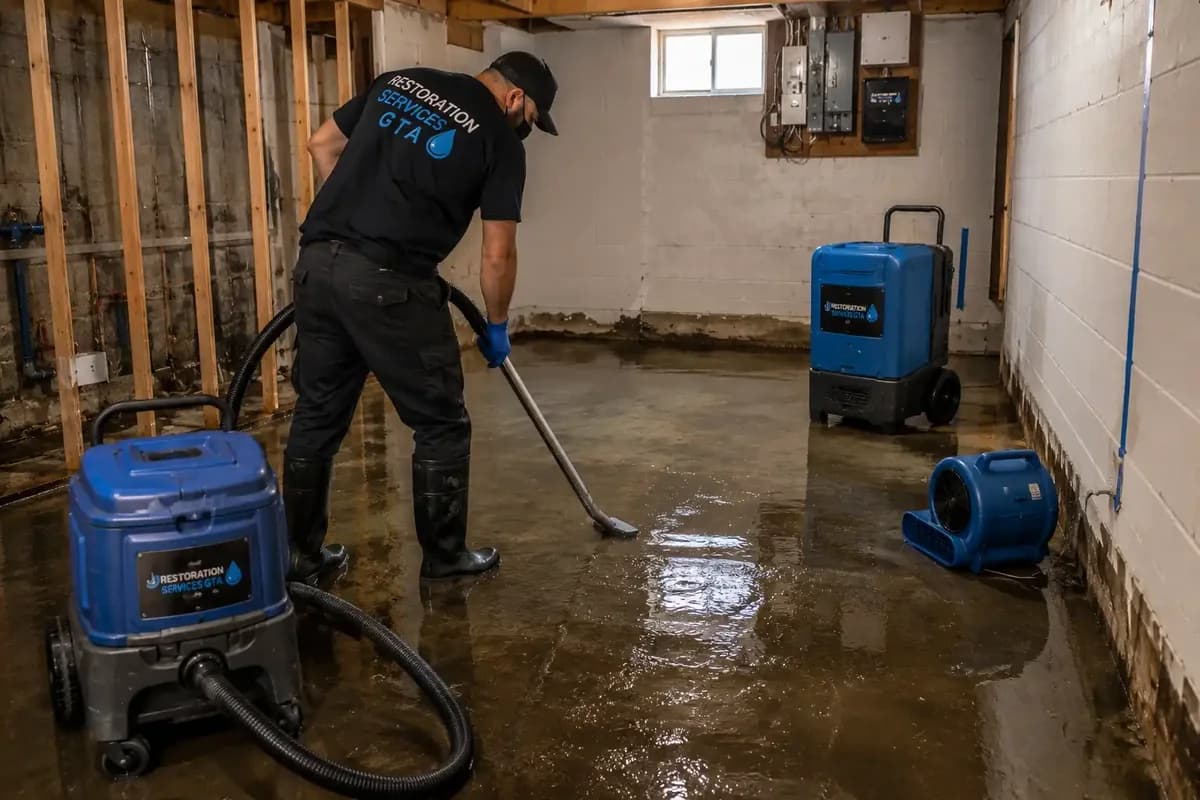
Water that came back up the sanitary lateral is Category 3, the same classification as raw sewage. It cannot be dried in place. Affected drywall, insulation, and underpad come out, the space is cleaned and disinfected, and only then does drying begin. That is sewage cleanup and disinfection, and it is the step people skip when they try to handle it themselves.
The mistake is understandable. A basement that has been pumped out and wiped down looks finished. It is not, because the contamination is inside porous materials that still look intact.
The 24 to 48 hour mould window
Mould needs moisture, an organic food source, and time. A wet basement supplies the first two immediately, and drywall paper and underpad are ideal food. Under normal indoor conditions, growth can establish within 24 to 48 hours of the water arriving.
That window is the reason a September 2 loss is urgent on September 3 and expensive by the following week. Our guide on how long mould takes to grow after water damage covers the timeline in detail, and if you are already past that window, mould inspection and removal is the next conversation rather than drying.
What to do in the first hour
If there is water in the basement now, work in this order. Our full first 24 hours after a basement flood guide covers each step in more depth.
- 1Stay out of standing water near outlets, the electrical panel, or appliances. Cut power to the affected area only if you can reach the breaker without stepping into water.
- 2If the water came up through the floor drain or in from outside, treat it as contaminated and keep people and pets out entirely.
- 3If it is a burst pipe or an appliance, shut off the supply at the main valve.
- 4Photograph and video everything before you move or discard a single item. This is the evidence your claim runs on.
- 5Call a certified crew. Extraction and drying started inside 24 hours is what keeps this from becoming a mould remediation.
- 6Report the loss to your insurer and keep every receipt, including for a hotel, a rental pump, or a plumber.
- 7Do not throw out damaged contents until they have been photographed and, where possible, seen by the adjuster.
Insurance: what a September 2 claim actually looks like
This is where most Vaughan homeowners get an unwelcome surprise, so it is worth being precise. A standard Ontario home policy covers sudden and accidental water damage, such as a burst supply line. It generally does not cover the two things that happened on September 2.
Overland water, meaning surface water entering the home from outside, is an optional endorsement. Sewer backup coverage is a separate optional endorsement. Many policies have one, some have both, and plenty have neither. Gradual seepage through a foundation is usually excluded outright, whatever else you carry.
Check your declarations page before you call, and use the exact wording when you report the loss. Our guide on whether home insurance covers water damage in Ontario breaks down each endorsement and the language to look for, and what water damage restoration costs in Ontario gives you a realistic range for what you are looking at either way.
We bill your insurer directly
On a covered claim we document the loss to insurer standards from the first visit, including moisture readings and photographs, and bill your carrier directly. In practice the deductible is usually the only amount that comes out of your pocket. On a claim that is denied, or where you choose not to file, you get a written scope and a fixed price before any work begins.
Vaughan is not Toronto, and the subsidy is different
This gets confused constantly, especially in Thornhill and along the Steeles Avenue boundary where people read Toronto coverage and assume it applies to them. It does not. Vaughan is in York Region, so the City of Toronto Basement Flooding Protection Subsidy Program worth up to $6,650 is not available to Vaughan homeowners.
Vaughan runs its own, considerably smaller program. The City covers 50 per cent of the invoiced cost of installing an approved sanitary back-water valve, to a maximum of $750, including eligible labour, materials, and permit fees. The valve has to be installed by a certified plumbing professional with an Ontario College of Trades membership number, a plumbing permit is required, and you apply afterward with the form at vaughan.ca/wastewater. Funding is limited and applications are handled first come, first served, which matters after a storm like this one.
Seven hundred and fifty dollars does not cover a valve on its own. It is still worth applying, because a back-water valve is the single most effective defence against the failure mode that put water in most Vaughan basements on September 2.
What flood restoration in Vaughan involves
A proper restoration is four jobs, not one, and they happen in order. Extraction removes standing water. Removal takes out whatever the water contaminated beyond saving, which on a Category 3 loss means drywall, insulation, and underpad, cut back past the visible water line. Disinfection treats what remains. Then structural drying brings the building materials back to normal moisture content, verified with meters rather than by feel.
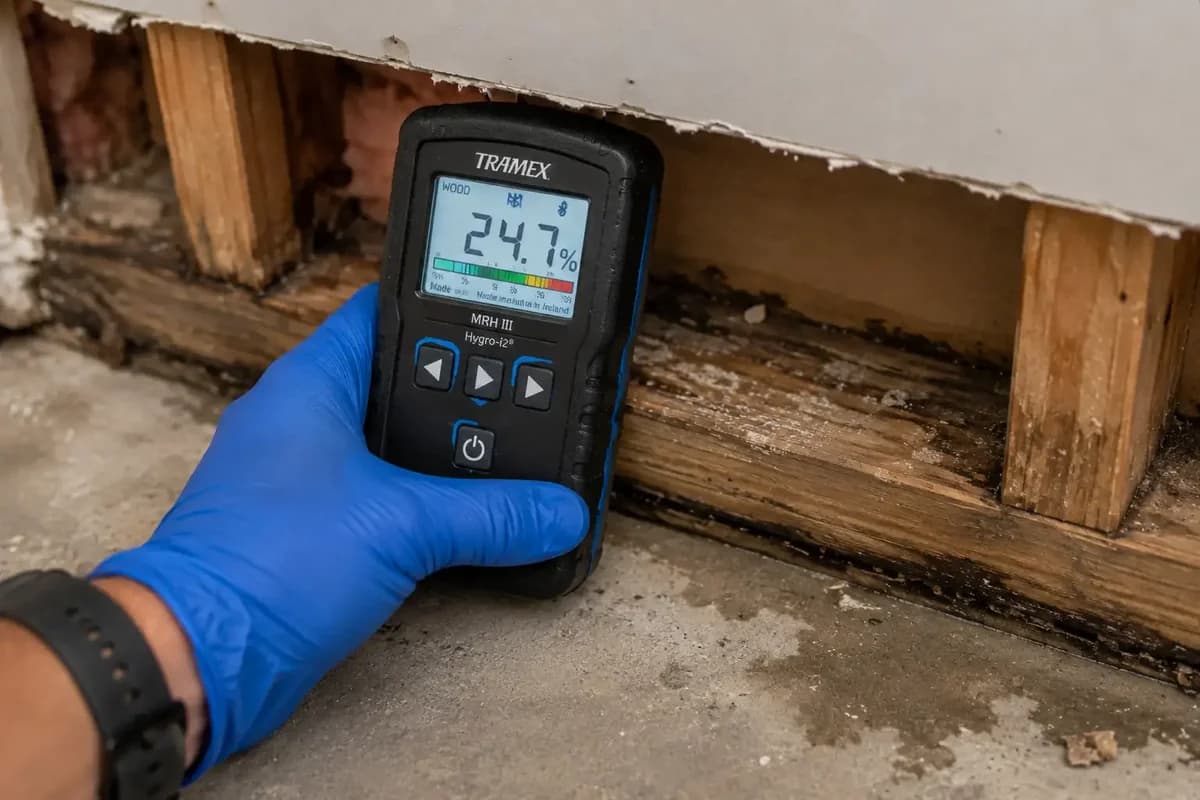
That last step is where the failures happen. A basement can feel completely dry while the bottom plate, the subfloor, and the inside of the wall cavity are still holding water. Six weeks later that becomes a mould remediation costing several times what the drying would have. We use thermal imaging and moisture meters to confirm the structure is genuinely dry, and we document the readings so your insurer has them on file.
For the Concord and Vaughan Enterprise Zone businesses that took water on September 2, the same principles apply with the addition of business interruption, equipment, and inventory. That is commercial water damage restoration, and the priority is usually getting an operating area back online while the rest of the building dries.
Our crews cover all of Vaughan around the clock, from Woodbridge and Kleinburg through Maple, Vellore, Concord, and Thornhill to the Vaughan Metropolitan Centre, and across the boundaries into Toronto, Richmond Hill, and Brampton. If there is water in your basement now, book a free estimate and we will be on site within the hour. You can also read what water damage restoration in Vaughan covers end to end.
Related Restoration Services
Restoration Crews Near You
We respond 24/7 across the Greater Toronto Area. Find your city:
About the Author
Restoration Services GTA
IICRC Certified Firm
Restoration Services GTA is an IICRC Certified Firm handling water, fire, mould, asbestos, and storm damage across the Greater Toronto Area. Our lead technicians carry Water Damage Restoration (WRT), Applied Structural Drying (ASD), and Fire & Smoke Restoration (FSRT) certifications, and every article here is written from live job experience across GTA properties.
- IICRC Certified Firm
- IHSA COR Certified
- WSIB Ontario Covered
- EACO Member