
 Water Damage
Etobicoke sits between three watersheds and a lakeshore, which is why it floods more than almost anywhere else in Toronto. Here's where the water comes from, which areas take it worst, and what to do when it reaches your basement.
In This Article
Etobicoke is boxed in by water on every side
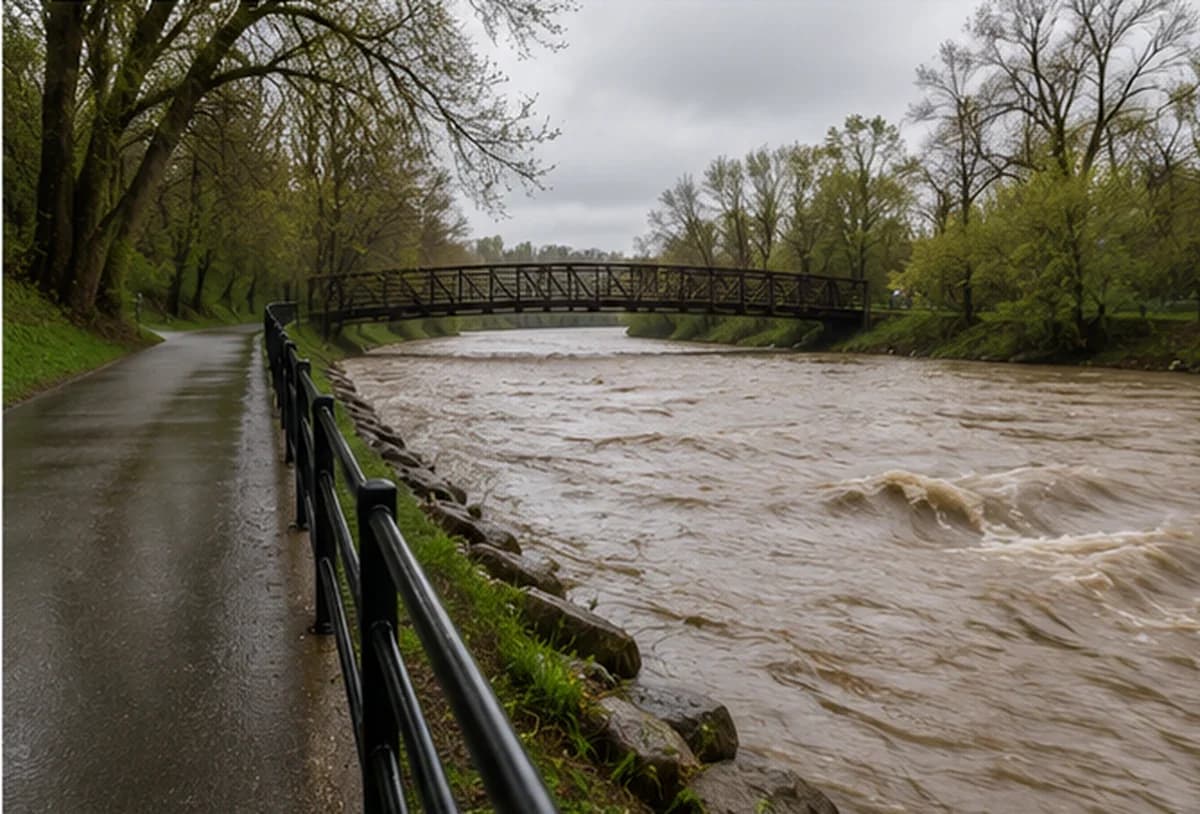
Most of Toronto deals with one flooding problem at a time. Etobicoke deals with three at once. It is bounded by the Humber River to the east, drained by Mimico Creek through its middle, edged by Etobicoke Creek on its western boundary with Mississauga, and fronted by Lake Ontario along the entire south. Very few parts of the GTA are hemmed in by that much water.
That geography is the reason flood restoration in Etobicoke is a different job than it is inland. A basement here can fill from a creek that has jumped its banks, from a sewer that surcharged during the same storm, or from groundwater pushing up through a slab because the water table is already high. Sometimes from more than one at once.
Below is where Etobicoke flooding usually starts, which parts of the community see repeated risk, what the City will pay to prevent it, and the sequence to follow if water is already in your basement.
What Hurricane Hazel taught Etobicoke
On the night of October 15, 1954, the remnants of Hurricane Hazel pushed Etobicoke Creek over its banks and through Long Branch. Three streets were flooded outright, seven people were killed, and around 400 residents were evacuated from the Pleasant Valley Trailer Park. Houses along Island Road and 43rd Street were lifted off their foundations, and several were carried into Lake Ontario while people watched from higher ground.
What happened afterward matters more than the storm itself. The flooded streets were condemned rather than rebuilt, and the land became parkland. That is why Marie Curtis Park sits at the mouth of Etobicoke Creek today. It is not a coincidence of planning, it is a floodplain that was judged too dangerous to live on.
The lesson holds. Where the water went in 1954 is broadly where it still wants to go. Modern flood control has raised the threshold considerably, but it has not moved the creeks, and the low ground is still low ground.
Where the water comes from
Four pathways account for nearly every Etobicoke flood call we take. They need different responses, and they are treated very differently by your insurer.
| Pathway | Where it shows up | Water category |
|---|---|---|
| Creek or river overflow | Properties near the Humber, Mimico Creek, or Etobicoke Creek during heavy rain or rapid melt | Category 3, grossly contaminated |
| Sewer and drain backup | Anywhere on older servicing, arriving up through the basement floor drain | Category 3, grossly contaminated |
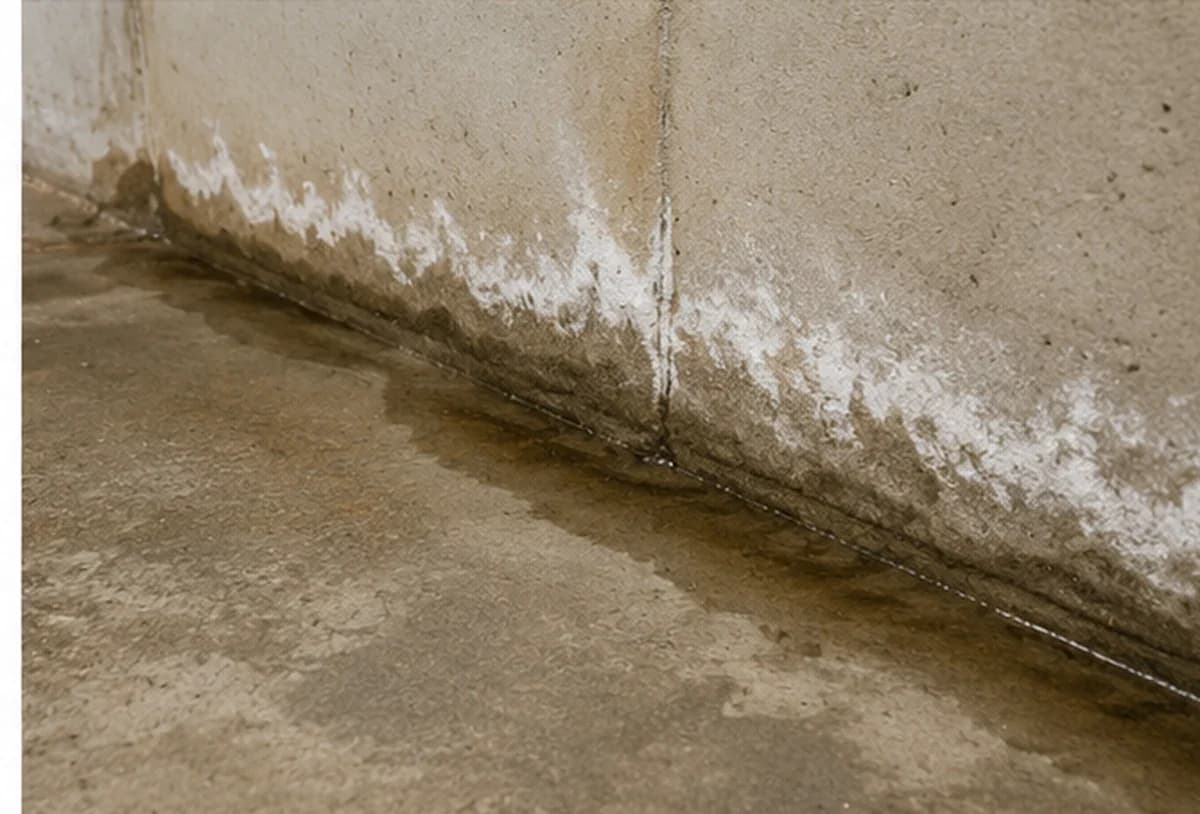
| Groundwater and hydrostatic pressure | Shoreline and low-lying lots, seeping through slab joints and foundation cracks | Category 1 to 2, rising with time |
| Plumbing and appliance failure | Any property, any season, unrelated to weather | Category 1 if caught fast |
Why the shoreline is its own problem
Along the lake, from Mimico through New Toronto and Long Branch, the water table sits close to the surface. Saturated soil around a foundation exerts hydrostatic pressure, which means water is being pushed against your basement rather than merely sitting beside it. That is how water finds its way through a hairline crack or the joint where the slab meets the wall, with no storm and no burst pipe involved.
This is also the pathway insurers are least willing to cover, because it presents as gradual seepage rather than a sudden event. Sump pumps, proper drainage, and dealing with small damp patches early are the only real defence.
Why creek water is not just water
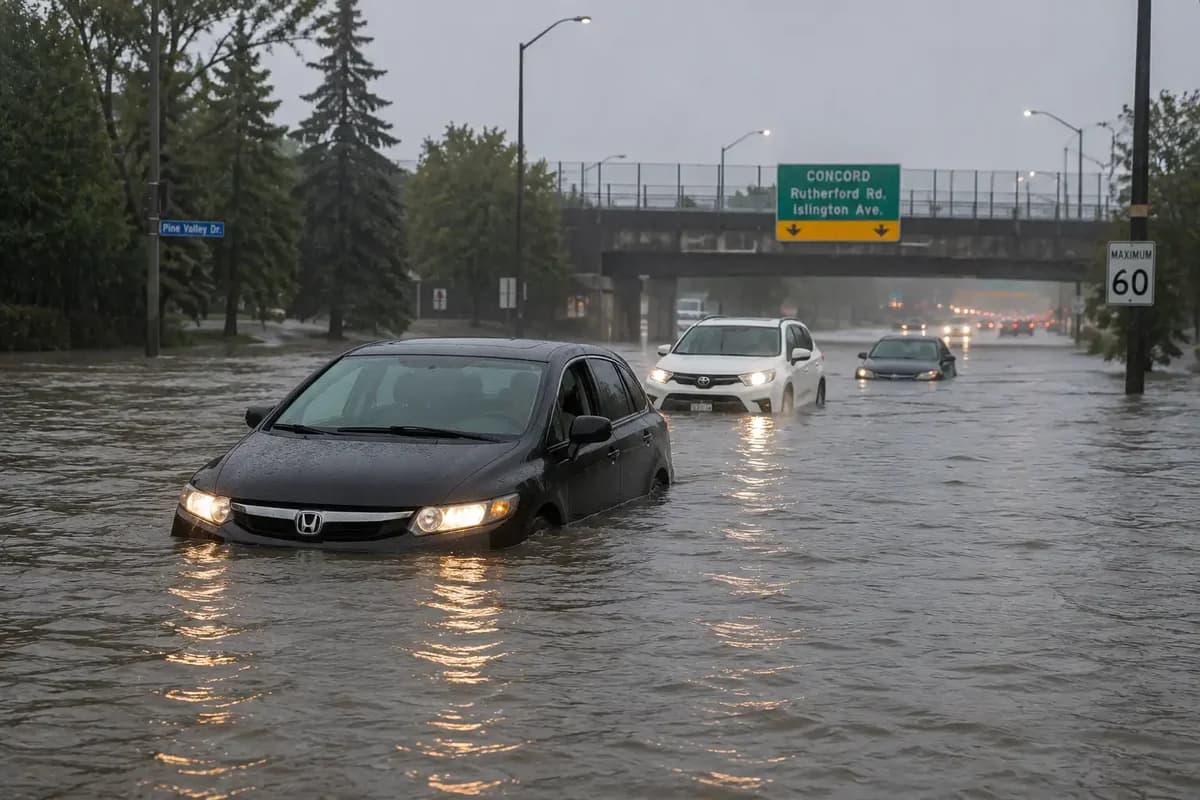
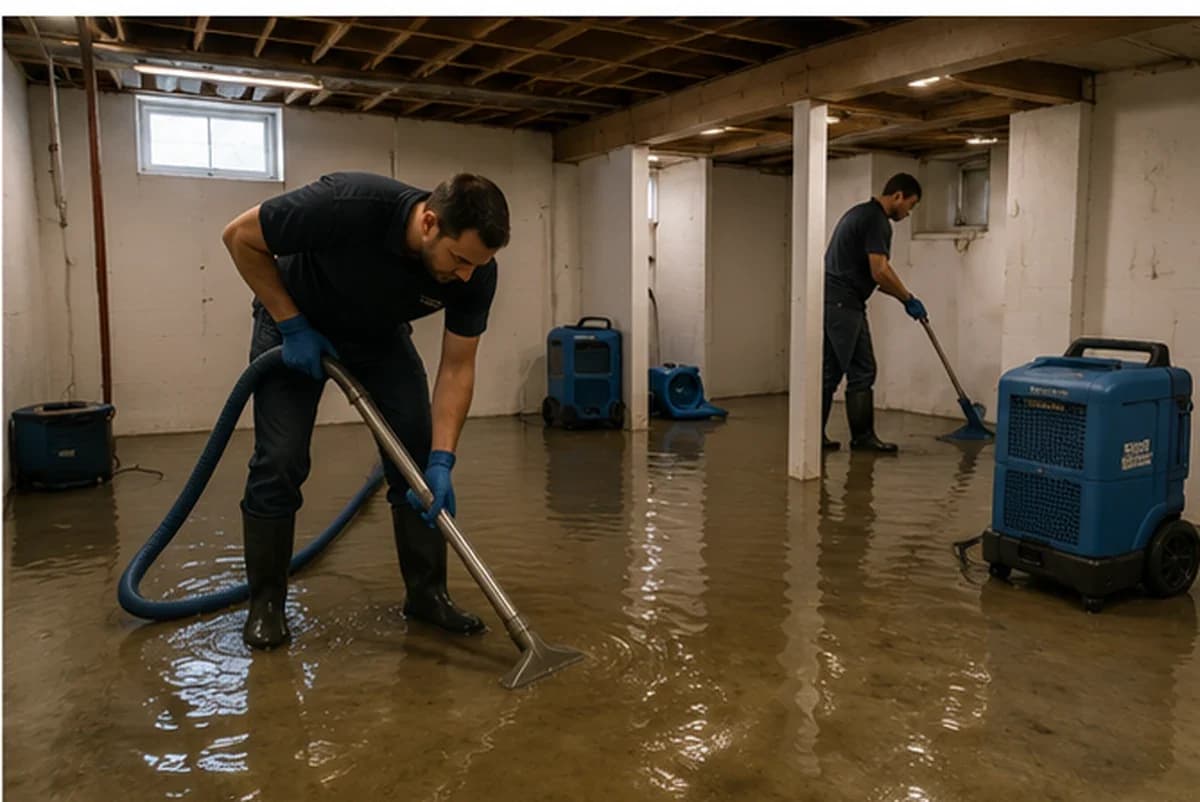
Water that has come out of a creek has crossed roads, storm drains, and everything in between. It is Category 3, the same classification as sewage, and it cannot be dried in place. Affected drywall, insulation, and underpad come out, the space is cleaned and disinfected, and only then does drying begin. That is sewage-grade cleanup, and it is not a shop-vac job.
The parts of Etobicoke that see it most
Risk in Etobicoke tracks elevation and proximity to water more than anything else. These are the patterns we see repeatedly:
- Long Branch and New Toronto, closest to the mouth of Etobicoke Creek and the lake, with the highest water table and the longest flood history in the borough.
- Mimico and Humber Bay Shores, where Mimico Creek backs up during heavy rain and affects the streets around Humber Bay Park.
- The Kingsway and Islington, where the housing is older, the servicing is original, and sewer backup is a more common failure than surface water.
- Rexdale and the north end, further from the lake but still on the Humber system, where storm runoff concentrates fast on flat ground.
Condo and high-rise flooding is its own category
Humber Bay Shores and the Islington corridor carry a lot of vertical density, and water damage in a tower behaves nothing like water damage in a house. A single failed supply line on the twentieth floor can affect a dozen units below it, and the split between unit owner, condo corporation, and their respective insurers gets complicated fast. Speed matters even more here, because every hour the water is spreading horizontally through the building as well as down.
Etobicoke is part of Toronto, so the subsidy applies
This gets missed constantly. Because Etobicoke amalgamated into the City of Toronto, Etobicoke homeowners qualify for the City's Basement Flooding Protection Subsidy Program on exactly the same terms as anyone in the old city.
As of May 1, 2026, that is up to $6,650 per property, covering up to 80 per cent of the invoiced cost for backwater valves (to $1,600 per device, maximum two), a sump pump (to $2,250), a battery backup (to $300), a home plumbing assessment (to $500), and foundation drain severance and capping (to $400). You need to own an eligible residential property, have your downspouts disconnected or exempted, use a contractor with a valid City business licence, and apply within two years of the work.
Given how much of Etobicoke sits on a high water table, the sump pump and battery backup portion is often the more valuable half of that for properties near the lake. Our Toronto water damage guide breaks the program down in full.
What to do in the first hour
If water is in the basement now, work in this order. Our full first 24 hours guide covers each step in more depth.
- 1Stay out of standing water near outlets, the panel, or appliances. Cut power to the area only if you can reach the breaker safely.
- 2If the water came from a creek or up through the floor drain, treat it as contaminated and keep people and pets out entirely.
- 3If it is a pipe or an appliance, shut off the supply.
- 4Photograph and video everything before you move or throw out anything at all.
- 5Call a certified crew. Extraction and drying inside 24 hours is what stops this becoming a mould job.
- 6Report the loss to your insurer and keep receipts for every emergency expense.
What flood restoration in Etobicoke involves
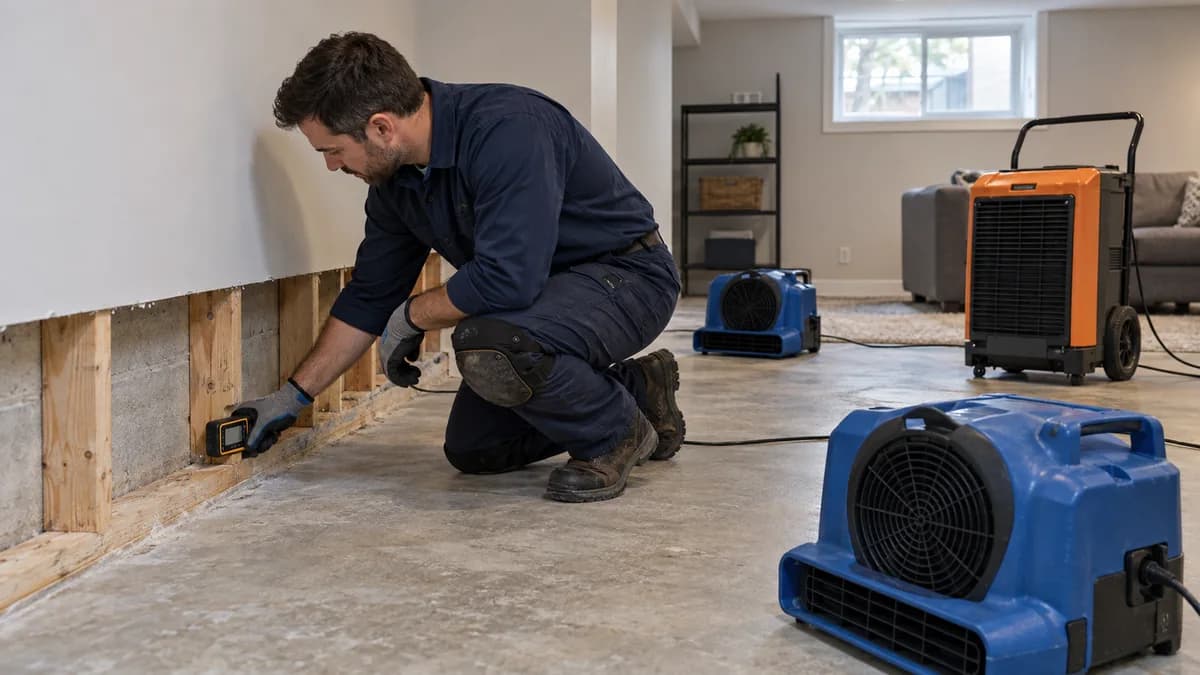
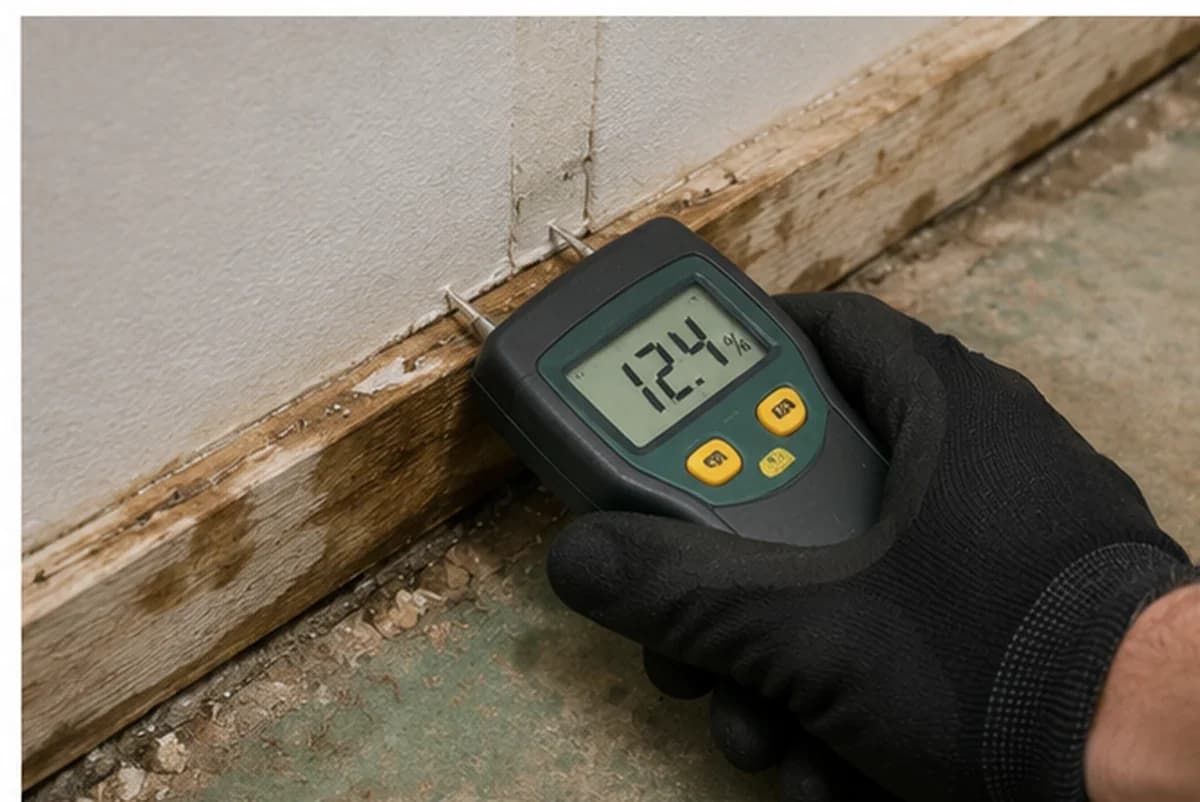
A proper flood restoration is four jobs, not one. Extraction removes the standing water. Removal takes out whatever the water has contaminated beyond saving, which on a Category 3 loss means drywall, insulation, and underpad. Disinfection treats what remains. Then structural drying brings the building materials back to their normal moisture content, verified with meters rather than by touch.
That last step is where most of the failures happen. A basement can feel dry while the bottom plate, the subfloor, and the inside of the wall cavity are still holding water, and six weeks later that becomes a mould remediation. We use thermal imaging and moisture meters to confirm the structure is genuinely dry, and we document the readings for your insurer.
Our crews cover all of Etobicoke around the clock, from Long Branch and Mimico through The Kingsway and Islington up to Rexdale, and across the boundaries into Toronto and Mississauga. Everything is documented to insurer standards from the first visit and billed directly to your carrier, so on a covered claim your deductible is usually the amount paid directly by the homeowner. If there is water in your basement now, book a free estimate and we will be on-site within the hour.
Related Restoration Services
Restoration Crews Near You
We respond 24/7 across the Greater Toronto Area. Find your city:
About the Author
Restoration Services GTA
IICRC Certified Firm
Restoration Services GTA is an IICRC Certified Firm handling water, fire, mould, asbestos, and storm damage across the Greater Toronto Area. Our lead technicians carry Water Damage Restoration (WRT), Applied Structural Drying (ASD), and Fire & Smoke Restoration (FSRT) certifications, and every article here is written from live job experience across GTA properties.
- IICRC Certified Firm
- IHSA COR Certified
- WSIB Ontario Covered
- EACO Member