
 Mold
MoldMould can start growing within 24 to 48 hours of water damage. Here's the full timeline, why speed matters so much, and what to do in the critical first day.
In This Article
The short answer: 24 to 48 hours
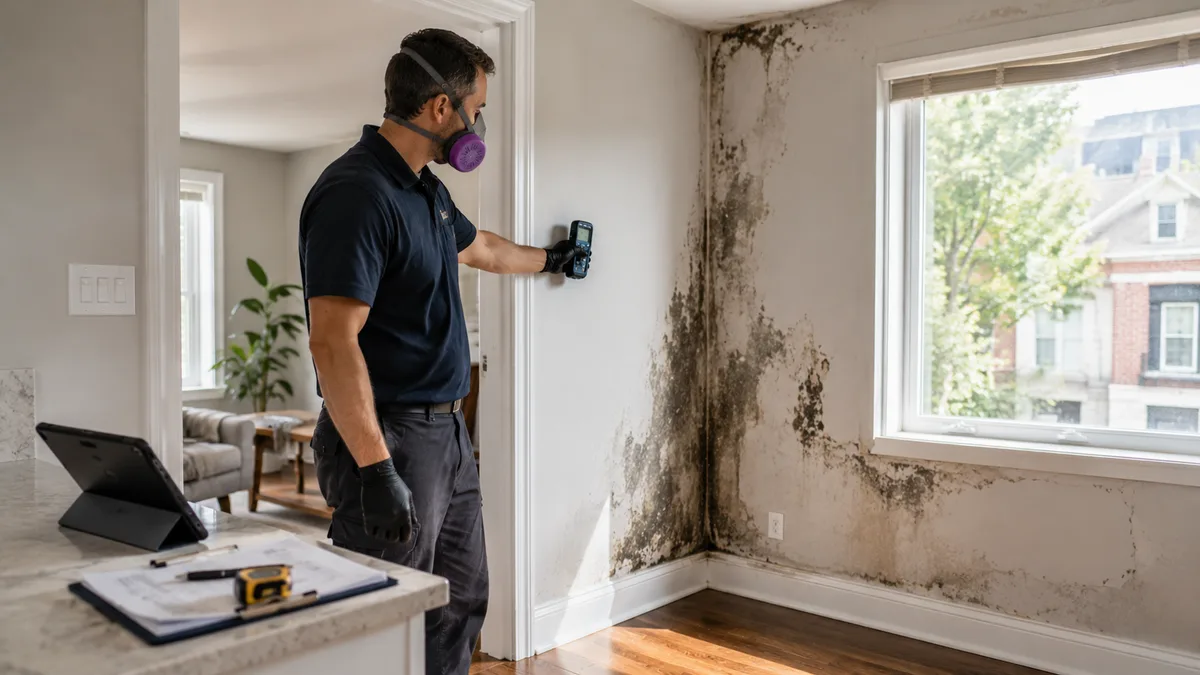
Mould can begin to grow within 24 to 48 hours of water damage. That is the standard established by the IICRC (the Institute of Inspection, Cleaning and Restoration Certification), and it is the single most important number to know after a leak or flood: you have roughly a day, maybe two, before a water problem becomes a mould problem.
It's worth separating two things, though, because they happen on different timelines: when mould starts growing, and when it becomes visible. The colony takes root within a day or two, but it needs longer to spread far enough to see. This guide breaks down the full timeline and, more importantly, what to do with that narrow window. Fast water damage restoration is what keeps you on the right side of it.
The mould growth timeline after water damage
Mould doesn't appear all at once. It moves through predictable stages, and knowing them shows why acting on day one matters so much more than acting on day three.
| Time Since Water Damage | What's Happening |
|---|---|
| 0 – 24 hours | Materials absorb water. No mould yet, this is the window to dry everything out and prevent it. |
| 24 – 48 hours | Mould spores activate and begin growing on damp, organic surfaces. |
| 48 hours – 1 week | Colonies establish and spread through drywall, insulation, and subfloor; a musty smell often appears. |
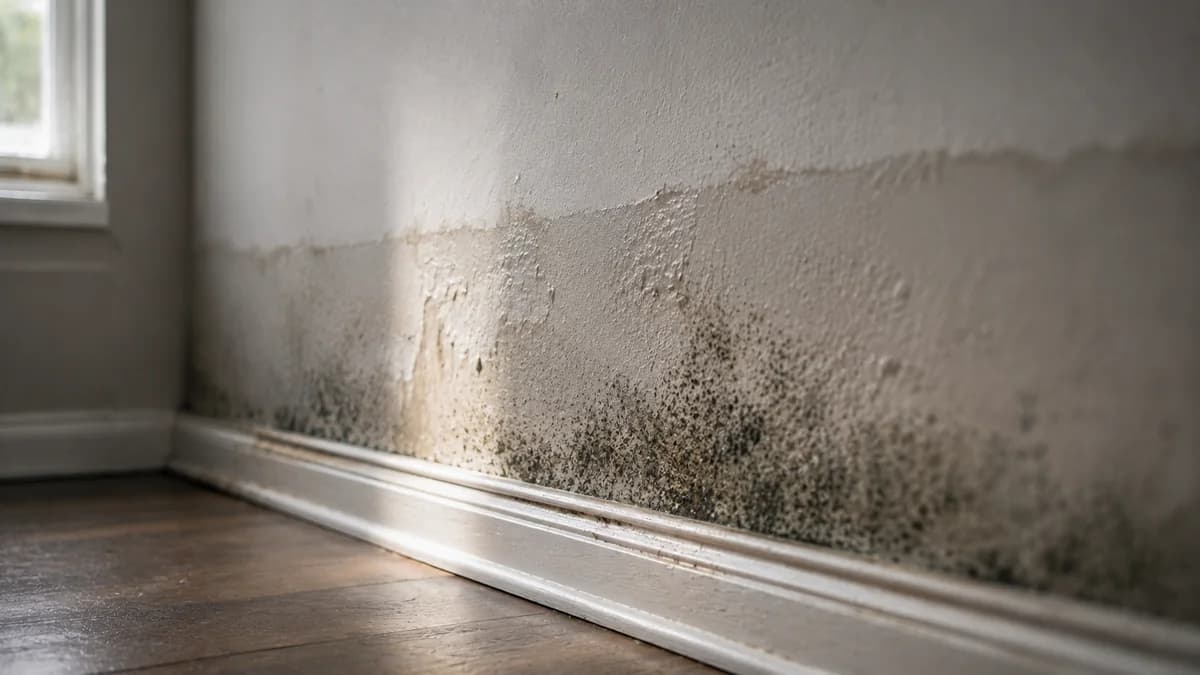
| 1 – 3 weeks | Growth becomes visible on surfaces, and the infestation is now widespread and harder to remove. |
| 3+ weeks | Extensive colonization; materials often must be removed, and remediation costs climb sharply. |
Why some mould is growing before you can see it
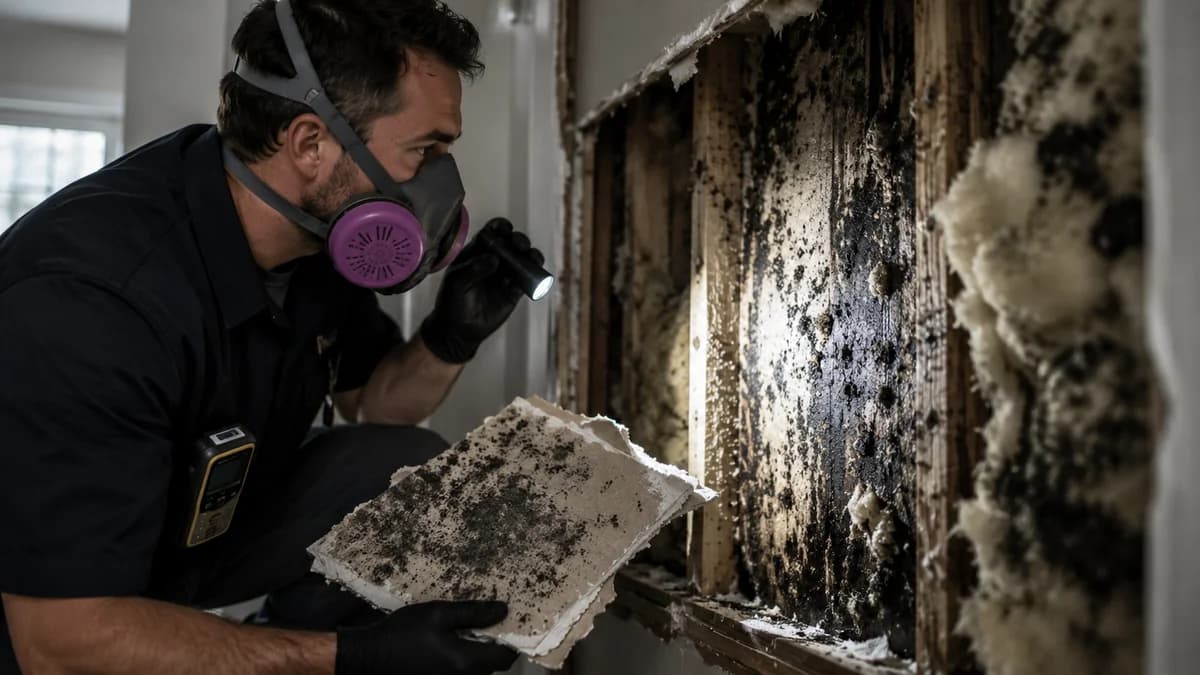
This is the part that catches homeowners off guard. Because mould takes hold within a day or two but stays invisible for one to three weeks, a surface that looks fine can already have an active colony growing inside the wall, under the flooring, or behind the baseboards.
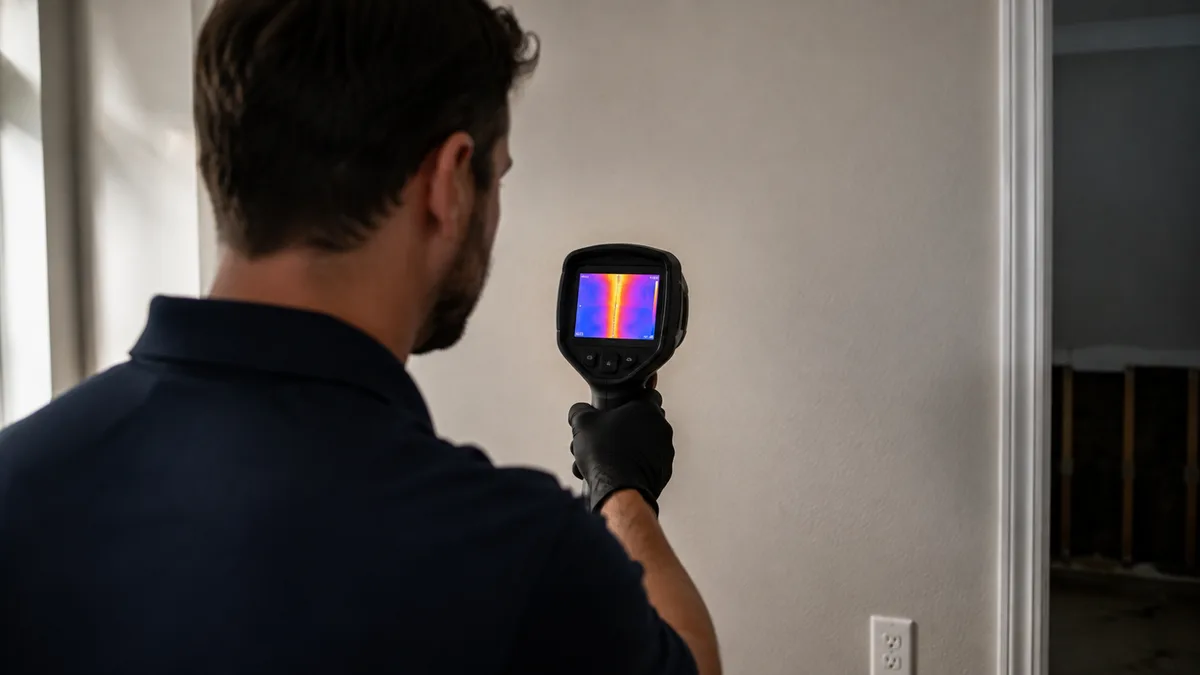
That hidden phase is exactly why a water loss should never be judged by appearance alone. The water you can see is only part of the problem; the moisture that wicked into cavities is where mould quietly starts. Certified crews map that hidden moisture with thermal imaging and moisture meters so the drying plan covers what you can't see.
What speeds mould growth up
The 24-to-48-hour figure is a guideline. The right conditions can push growth toward the fast end of that range, and a few common GTA scenarios do exactly that.
- Warmth — mould thrives roughly between 25°C and 30°C, so a heated home in winter or a humid basement in summer both qualify.
- Humidity above 60% — common in basements, bathrooms, and after any flood.
- Porous, organic materials — drywall, wood, carpet, and insulation feed mould and let it establish fast.
- Poor airflow — stagnant, enclosed spaces like closets, crawl spaces, and behind furniture.
- A lingering moisture source — an unfixed leak keeps feeding the colony indefinitely.
How to stop mould before it starts
The good news in all of this: mould is preventable if you act inside that first-day window. The goal is to remove the moisture before mould has time to establish.
- 1Stop the water source and, if it's safe, shut off the supply or power to the area.
- 2Remove standing water fast, professional extraction beats a shop vac by a wide margin.
- 3Dry the structure aggressively with commercial air movers and dehumidifiers, not just household fans.
- 4Check for hidden moisture inside walls and under floors with moisture meters.
- 5Verify it is genuinely dry, drying to a measured standard is what helps prevent mould.
What if mould has already started?
If it's been more than a couple of days, or you already smell that musty odour, assume mould may have begun and treat it accordingly. Don't disturb it without containment, which only spreads spores, and don't rely on bleach, which doesn't remove mould from porous materials or fix the moisture behind it.
At that point, professional mould inspection and removal is the safe path: containment, physical removal, and fixing the moisture source so growth cannot restart. If you've had water damage in the last few days, book a free estimate and we'll assess both the moisture and any early mould before it spreads.
Related Restoration Services
Restoration Crews Near You
We respond 24/7 across the Greater Toronto Area. Find your city:
About the Author
Restoration Services GTA
IICRC Certified Firm
Restoration Services GTA is an IICRC Certified Firm handling water, fire, mould, asbestos, and storm damage across the Greater Toronto Area. Our lead technicians carry Water Damage Restoration (WRT), Applied Structural Drying (ASD), and Fire & Smoke Restoration (FSRT) certifications, and every article here is written from live job experience across GTA properties.
- IICRC Certified Firm
- IHSA COR Certified
- WSIB Ontario Covered
- EACO Member