Water Damage Restoration
Structural Drying and Dehumidification
LGR drying monitored to dry standard
(416) 639-624224/7 Emergency Dispatch
Request a Free Structural Drying and Dehumidification Quote
No obligation. Certified crews on-site within the hour. We bill your insurer directly.
- IICRC-certified
- Direct insurance billing
- 24/7 dispatch
Water Damage
We deploy commercial air movers and LGR dehumidifiers and monitor moisture daily until materials reach dry standard, preventing hidden rot and mould.
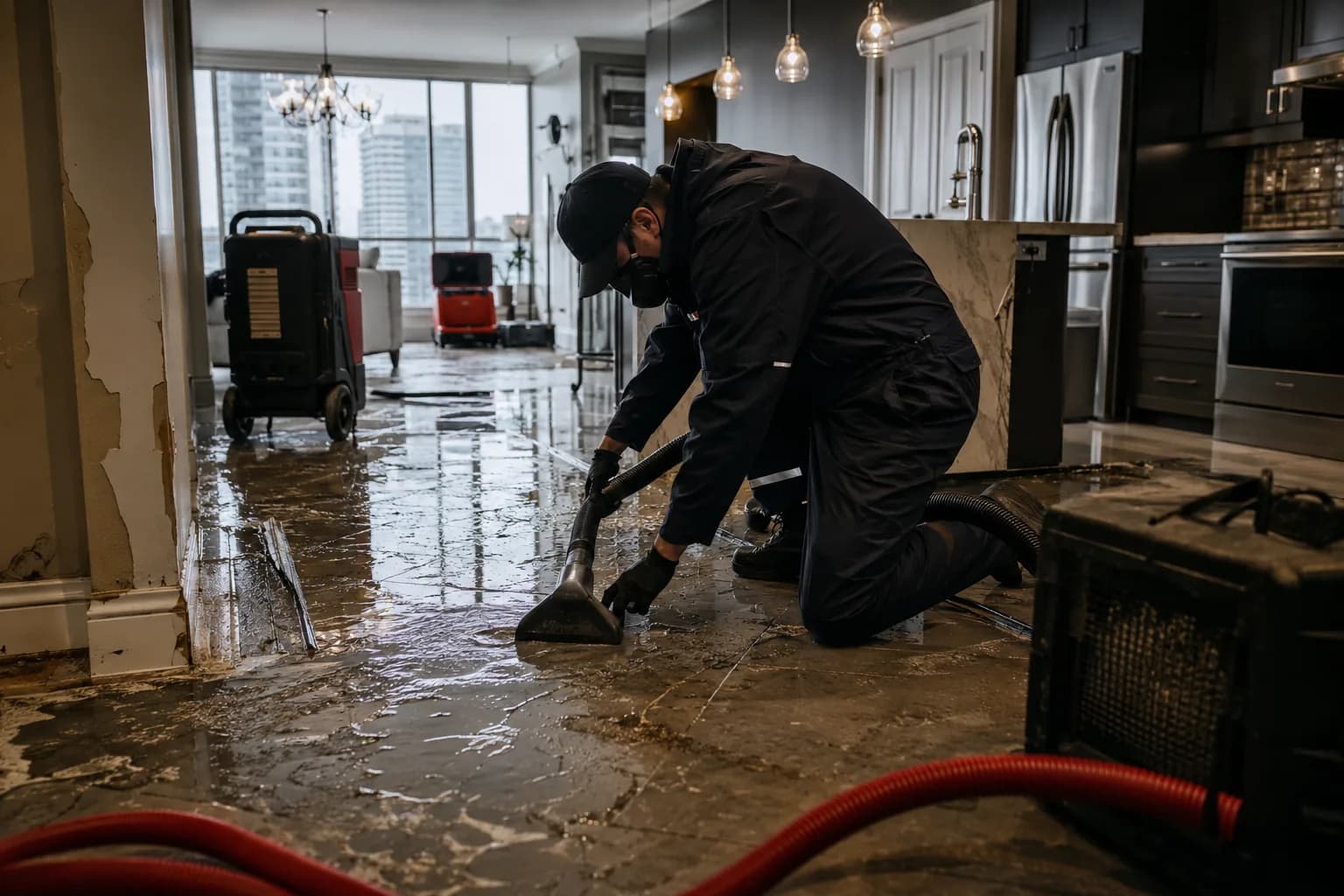
- Emergency water extraction & pump-out
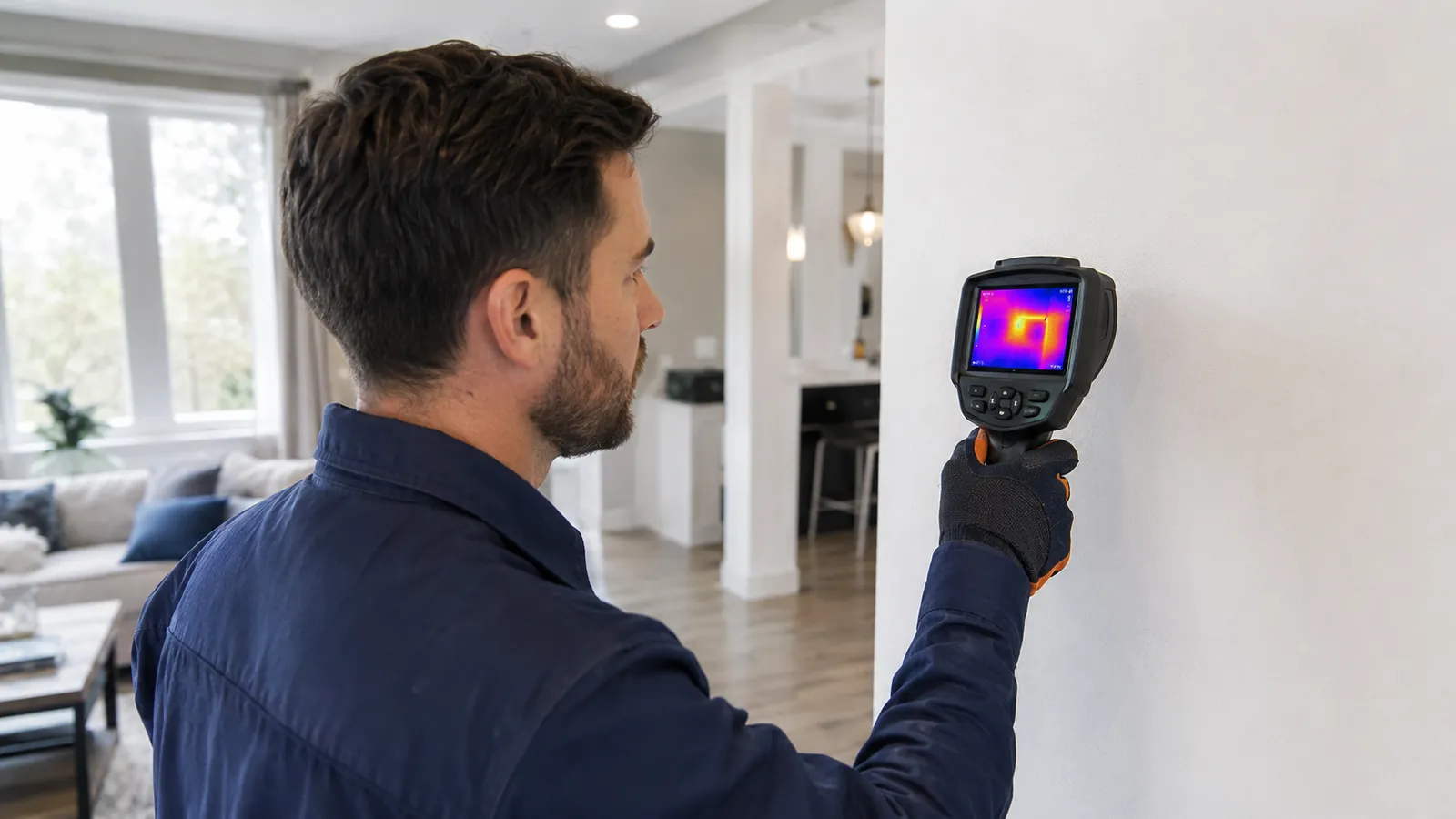
- Sub-floor thermal imaging to find hidden moisture
- Sewage cleanup & disinfection
- Direct insurance billing
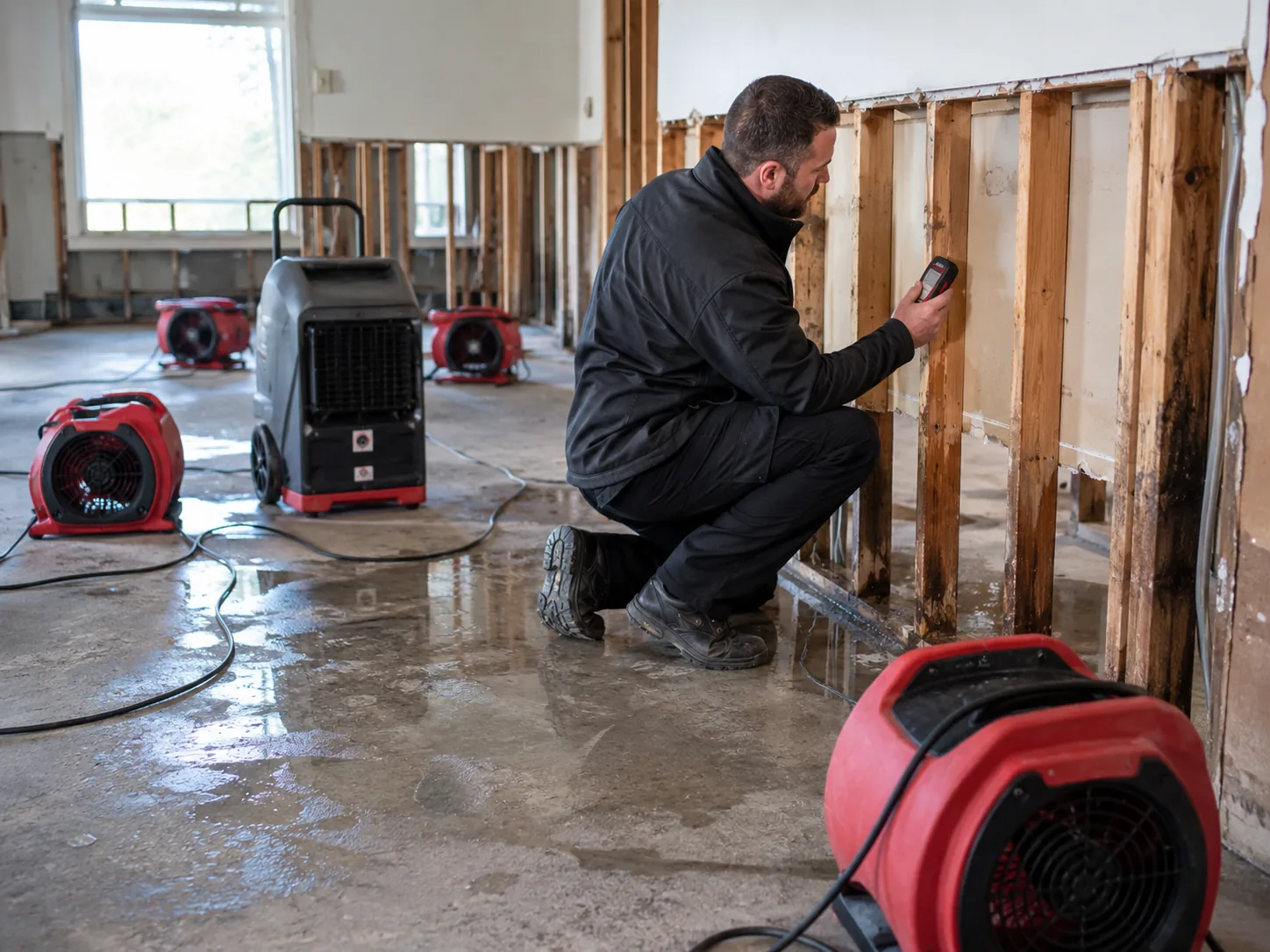
Professional Structural Drying & Dehumidification in the GTA
Extracting standing water is only half the job. The moisture that soaks into drywall, subfloors, framing, and insulation is what causes warping, rot, and mould weeks later, and it cannot be removed with household fans or a shop vacuum. Proper structural drying returns a building to a safe, stable condition.
Restoration Services GTA provides professional structural drying and dehumidification across the Greater Toronto Area. Our IICRC-certified crews deploy commercial drying equipment, monitor moisture daily, and dry your property to a verified standard, preventing the hidden damage that turns a small water loss into a major one. Whether it follows a flood, a burst pipe, or a sewage backup, drying done right is the step that protects everything that comes after.
Why Proper Drying Matters
Materials that look and feel dry on the surface are often still saturated underneath. Without verified drying, that trapped moisture quietly does its damage long after the visible water is gone, and the cost of getting it wrong usually shows up as mould and rot months later.
- Trapped moisture warps hardwood, swells drywall, and delaminates flooring.
- Damp framing and subfloor can rot and lose structural strength over time.
- Mould begins to grow in damp materials within 24 to 48 hours.
- Lingering moisture produces persistent musty odours throughout the home.
The science of drying to standard
Drying a structure properly is about controlling temperature, airflow, and humidity together so moisture moves out of materials and into the air, where dehumidifiers can remove it. It's a measured, monitored process, not just pointing fans at a wet floor, which is exactly why professional equipment and daily readings make the difference between dry and 'dry enough'.
The Equipment We Use
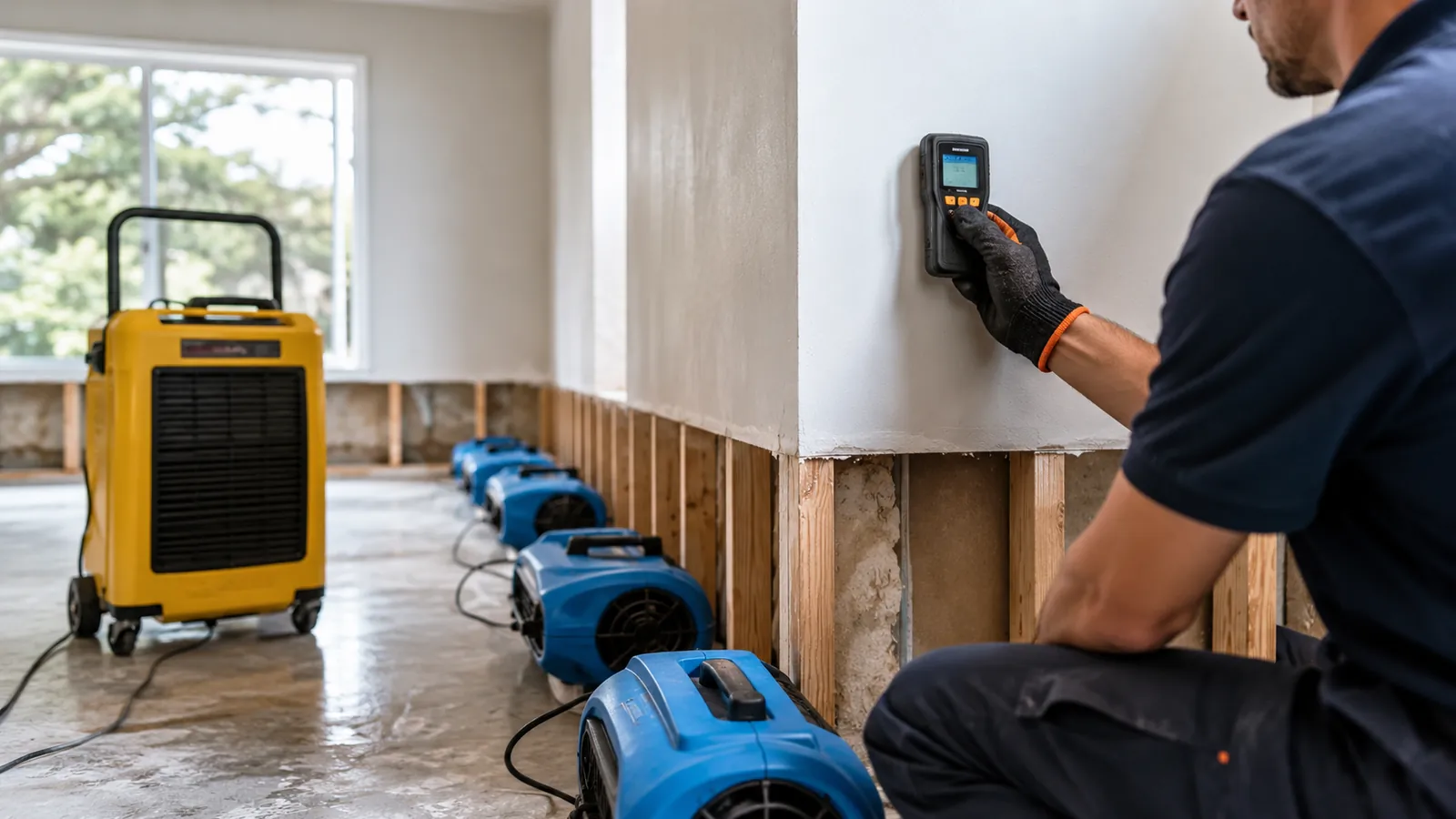
Effective drying depends on the right equipment working together, sized to the loss. Our crews bring commercial-grade gear that household tools simply can't match:
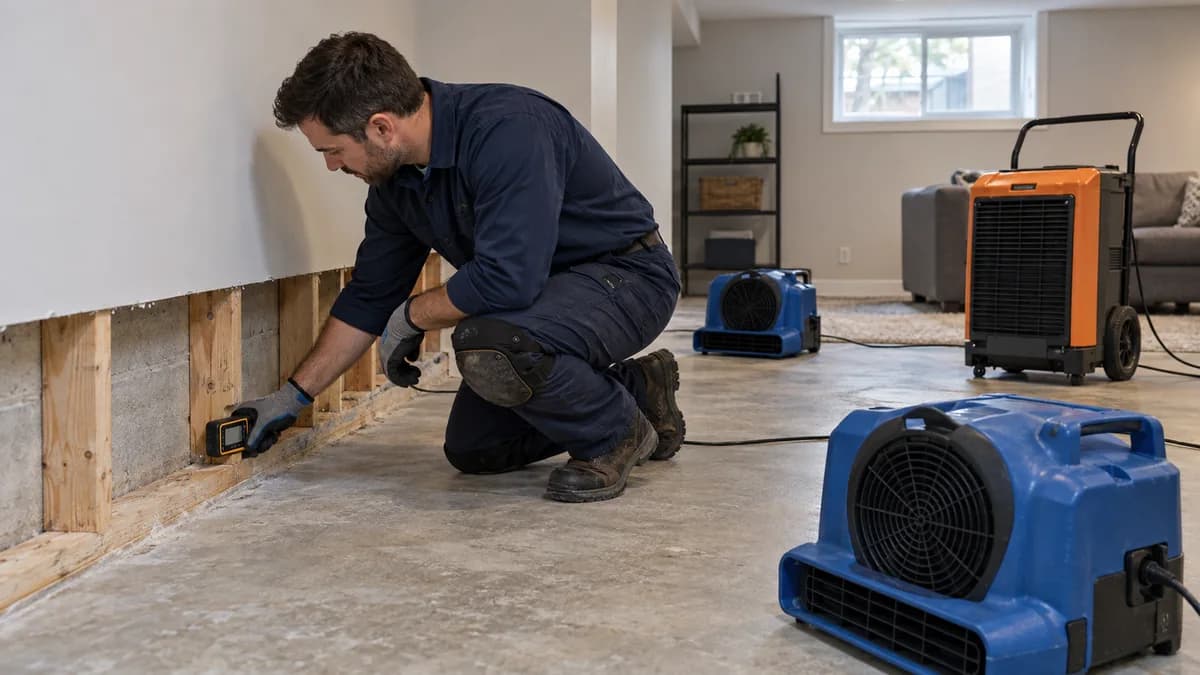
- High-velocity air movers that pull moisture out of materials
- Low-grain-refrigerant (LGR) dehumidifiers that remove moisture from the air
- Infrared thermal imaging to locate hidden moisture
- Penetrating and non-penetrating moisture meters for daily readings
- Specialty drying systems for hardwood floors, walls, and cavities
- HEPA air scrubbers to maintain air quality during drying
How It Works
Our Structural Drying Process
We follow a controlled, measured drying process that's documented every step of the way:
Moisture mapping
Using thermal imaging and penetrating moisture meters, we map exactly which materials are wet and how saturated they are, establishing a clear drying target for the structure.
Equipment placement
Air movers and LGR dehumidifiers are positioned and sized to the space, creating the airflow and humidity control needed to dry the affected materials efficiently.
Daily monitoring to dry standard
We return daily to take moisture readings and adjust the equipment, and only remove it once the readings confirm materials have reached a verified dry standard, giving you documented proof the structure is genuinely dry.
Drying That Prevents Mould and Future Damage
The entire goal of structural drying is to deny mould and rot the moisture they need before they can take hold. By drying to a verified standard rather than 'good enough,' we protect your property from the secondary damage that often costs more than the original loss.
Speed matters as much as method, mould can begin within 24 to 48 hours, so we begin drying the same day wherever possible and run the equipment continuously until the job is done.
Documentation & Insurance
When drying is part of a larger water-damage claim, thorough documentation protects you. We record daily moisture readings and equipment logs, documenting the drying process to insurer standards so the work is fully recorded and defensible.
We bill your carrier directly and coordinate with your adjuster, so the drying and any related mitigation stay part of one organized claim from start to finish.
Property Emergency? Don't Wait.
Secondary damage starts within hours. Our certified crews are on call 24/7 across the GTA.
More Water Damage Services
Why Choose Us
Why the GTA trusts Restoration Services GTA
24/7 Emergency Response
Crews on call around the clock, typically on-site within the hour.
IICRC-Certified Crews
Trained, certified technicians working to industry standards.
Direct Insurance Billing
We document the loss and bill your carrier directly.
One Team, Start to Finish
Mitigation through full reconstruction under one roof.
Our Google Rating
Restoration Services GTA: 5.0 / 5 from 3 Google reviewsBusiness-wide rating across all services.
Proudly ServingWater Damage Across the GTA
Service Area Locator
Find Us Across the GTA
Search our service coverage and get directions from anywhere in the Greater Toronto Area.
Frequently Asked Questions
Why can't I just dry it out with household fans?
Household fans and shop vacuums can't reach or remove the moisture trapped inside subfloors, drywall, and wall cavities, which is what causes mould and rot. Professional drying uses commercial equipment and daily monitoring to dry to a verified standard.
How long does structural drying take?
Most structural drying takes 3 to 5 days, depending on how much water was involved, the materials affected, and saturation levels. We monitor moisture daily and only remove equipment once verified dry standards are met.
How do you know when materials are dry?
We take daily moisture readings with meters and compare them to a dry standard for each material. The equipment stays until those readings confirm the structure is genuinely dry, not just dry to the touch.
Is the drying equipment loud or disruptive?
Air movers and dehumidifiers do run continuously during drying, which creates some noise and warmth. It's temporary and essential: running them around the clock is what dries the structure fast enough to prevent mould.
Does drying prevent mould?
Drying to a verified standard is the single best way to prevent mould, because it removes the moisture mould needs before it can grow. Speed matters: mould can begin within 24 to 48 hours, so fast, thorough drying is critical.
Is structural drying documented for my insurance claim?
Yes. We record daily moisture readings and equipment logs and document the drying to insurer standards, then bill your carrier directly so the work is fully recorded and defensible.
Other Restoration Services
NEED EMERGENCY RESTORATION?
Secondary damage starts within 24 hours. Our certified crews are on call across the GTA, 24/7.