
 Water Damage
The hours right after a basement flood decide how much of your home you can save. Here's exactly what to do, and what to avoid, before the restoration crew arrives.
In This Article
Why the first 24 hours matter so much
A flooded basement is one of the most common and most stressful property emergencies Greater Toronto Area homeowners face. Whether the water came from a burst pipe, a failed sump pump, or a summer storm overwhelming the city's drains, the response window begins the moment water touches your floors. Within 24 to 48 hours, what began as a cleanup problem becomes a mould and structural problem.
Water is deceptively destructive. It does not just sit on the surface. It wicks into drywall, soaks subfloors, runs behind baseboards, and pools in wall cavities where you cannot see it. The longer it stays, the more materials have to be torn out and replaced rather than dried and saved. That single fact is why your response in the first day matters more than almost anything else.
This guide walks through exactly what to do in those critical first hours: how to stay safe, how to limit the damage, what to avoid, and when to bring in a certified crew. Follow these steps and you give yourself the best possible chance of a faster, cheaper, and cleaner recovery.
| Time Since the Flood | What Happens |
|---|---|
| Within minutes | Water spreads across the floor and soaks into carpet, drywall, and belongings. |
| Within hours | Furniture stains, finishes swell, and contents wick moisture upward. |
| 24 to 48 hours | Mould and mildew begin to grow and musty odours set in. |
| Days or more | Framing weakens and saturated materials must be torn out instead of dried. |
Common causes of basement flooding in the GTA
Understanding where the water came from helps you stop it and tells your restoration crew and insurer what they are dealing with. In the GTA, basement flooding usually traces back to one of a handful of culprits:
- Burst, frozen, or leaking supply pipes, especially during freeze-thaw winters
- Sump-pump failure or a power outage during a storm
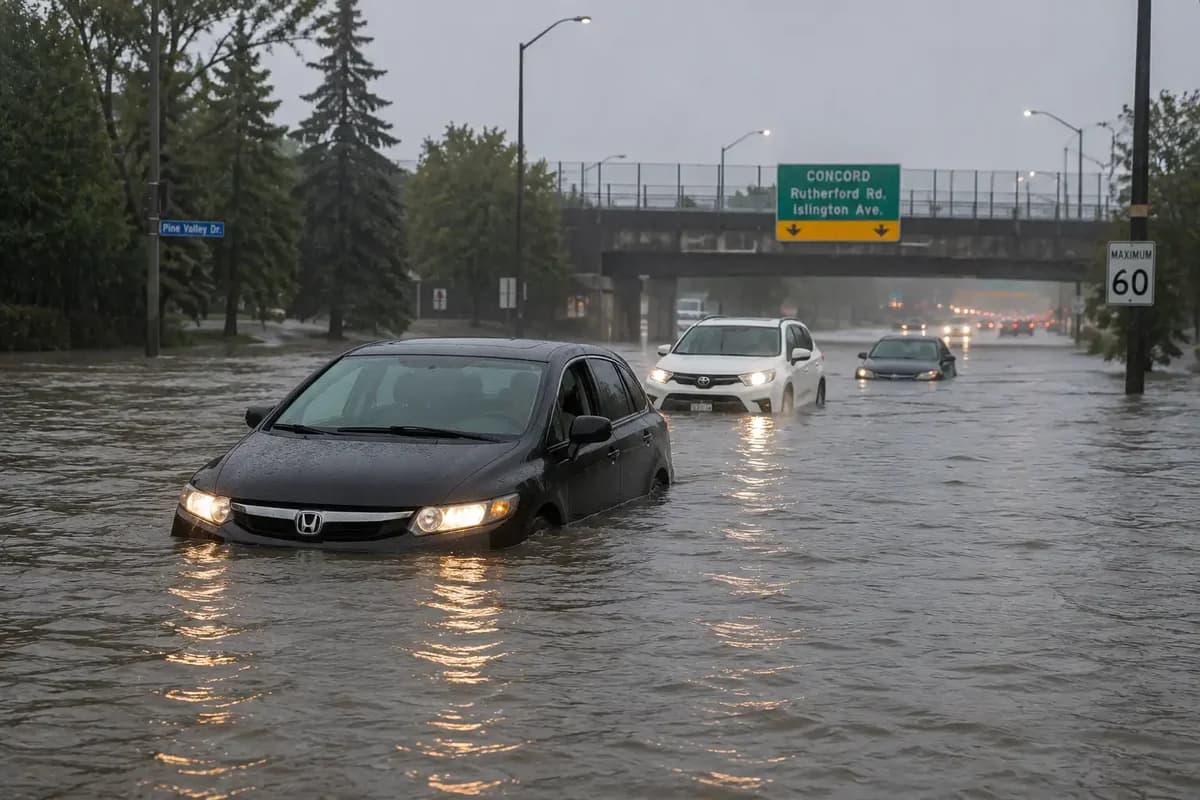
- Sewer and drain backups after heavy rain overwhelms the system
- Overland flooding from intense downpours and rapid spring melt
- Appliance failures such as water heaters, washing machines, and dishwashers
- Foundation cracks and poor exterior drainage letting groundwater seep in
Why older neighbourhoods flood first
The cause often follows the housing stock. Postwar bungalows and semis across North York, Scarborough, and Etobicoke frequently sit on combined sewers and clay drain tile, so a heavy downpour backs up through the floor drain rather than seeping through the walls. In newer builds around Vaughan and Mississauga, the more common failure is a sump pump that stops during the same storm that needs it most.
Either way the response is identical: extract fast, dry the structure properly, and document everything. Knowing which one you are dealing with just tells the crew where to look first.
Step 1: Make safety your first priority
Before you do anything else, make sure it is safe to enter the basement. Standing water and electricity are a dangerous combination, and contaminated water carries its own risks. No belonging is worth an injury.
- Do not step into a flooded basement if water is near electrical outlets, the panel, or appliances.
- If you can safely reach the breaker, shut off power to the affected area. Otherwise wait for an electrician or your crew.
- Treat any flooding that involves sewage as a biohazard and stay out until professionals arrive.
- Wear rubber boots and gloves if you must enter, and watch for sagging ceilings or signs the structure has been compromised.
Step 2: Stop the source of the water
If the flooding is coming from your plumbing, whether it is a burst pipe, a failed water heater, or an overflowing fixture, shut off the water at the main valve to stop more water from entering. Knowing where your main shut-off is before an emergency happens can save you thousands in damage, so if you are not sure, find it now.
If the source is groundwater, a sewer backup, or a storm, there may be nothing to shut off. In that case the priority shifts entirely to extraction and drying as soon as it is safe. The faster the water comes out, the less it spreads.
Step 3: Document everything for your insurance claim
Before you start moving things or cleaning up, photograph and video the damage from every angle. This documentation is critical for your insurance claim, and it costs you nothing but a few minutes. Insurers want to see the extent of the loss as it happened, not after it has been tidied. (For a fuller breakdown of coverage, see our guide on whether home insurance covers water damage in Ontario.)
- Take wide shots of each room and close-ups of damaged belongings.
- Capture the water line on the walls if there is one.
- Keep receipts for anything you buy during the emergency, like a pump or wet vac.
- Do not throw out damaged items until they have been documented and your adjuster or restoration crew has reviewed them.
Step 4: Limit the damage while you wait
Once it is safe and you have documented the scene, a few simple actions can save belongings and slow the spread of damage before the crew arrives:
- Move valuables, electronics, and documents to a dry upper floor.
- Lift furniture off wet carpet, or place foil or wood blocks under the legs to prevent staining.
- Remove area rugs and small items from the water.
- Open windows for ventilation if the weather is dry, and run a dehumidifier if you have one.
- Mop or towel up what clean water you safely can to slow its spread.
What not to do after a basement flood
Just as important as the right steps are the mistakes that make things worse. In the rush to fix the problem, well-meaning homeowners often do real harm.
- Don't use a household vacuum to remove water; it isn't built for it and you risk electrocution.
- Don't use electrical appliances or outlets in or near standing water.
- Don't enter water that may be contaminated with sewage without protection.
- Don't wait to 'see if it dries on its own'; hidden moisture leads to mould within a day or two.
- Don't throw away damaged items before they're documented for your claim.
Step 5: Call a certified restoration crew
Home remedies and shop vacuums cannot dry a structure to standard, and water that looks gone has usually wicked into drywall, subfloors, and wall cavities where mould begins within 24 to 48 hours. Professional flooded basement cleanup is about reaching and removing the moisture you cannot see, not just the water you can.
Fast water extraction
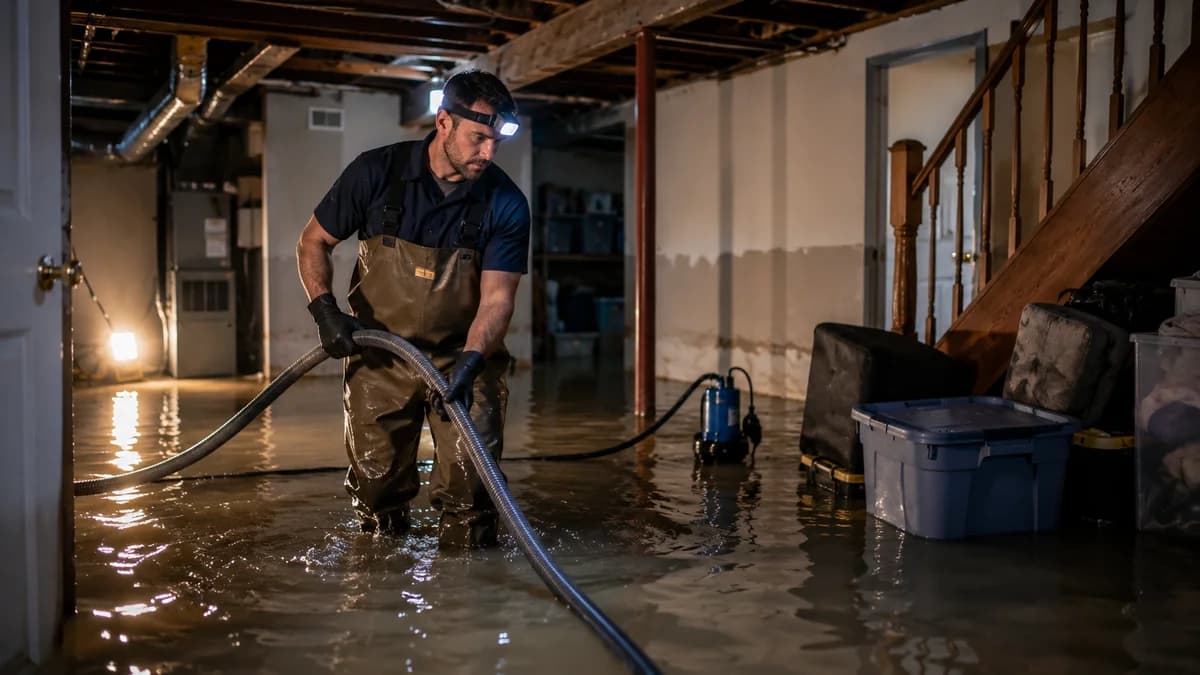
Truck-mounted extractors and submersible pumps remove standing water far faster than anything you have at home, so the structure can begin drying the same day rather than sitting saturated for days.
Structural drying and monitoring
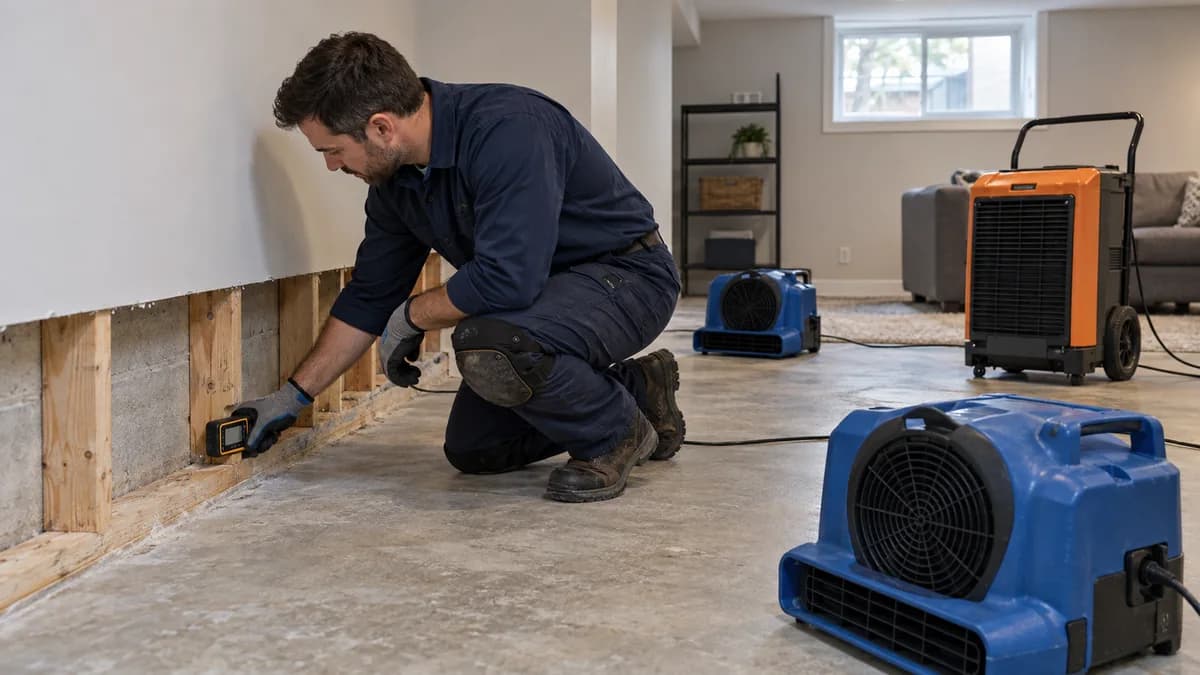
Commercial air movers and LGR dehumidifiers handle the structural drying to a verified standard, and the crew monitors moisture levels daily until the readings confirm it is genuinely dry, not just dry to the touch.
Sanitizing and direct insurance billing
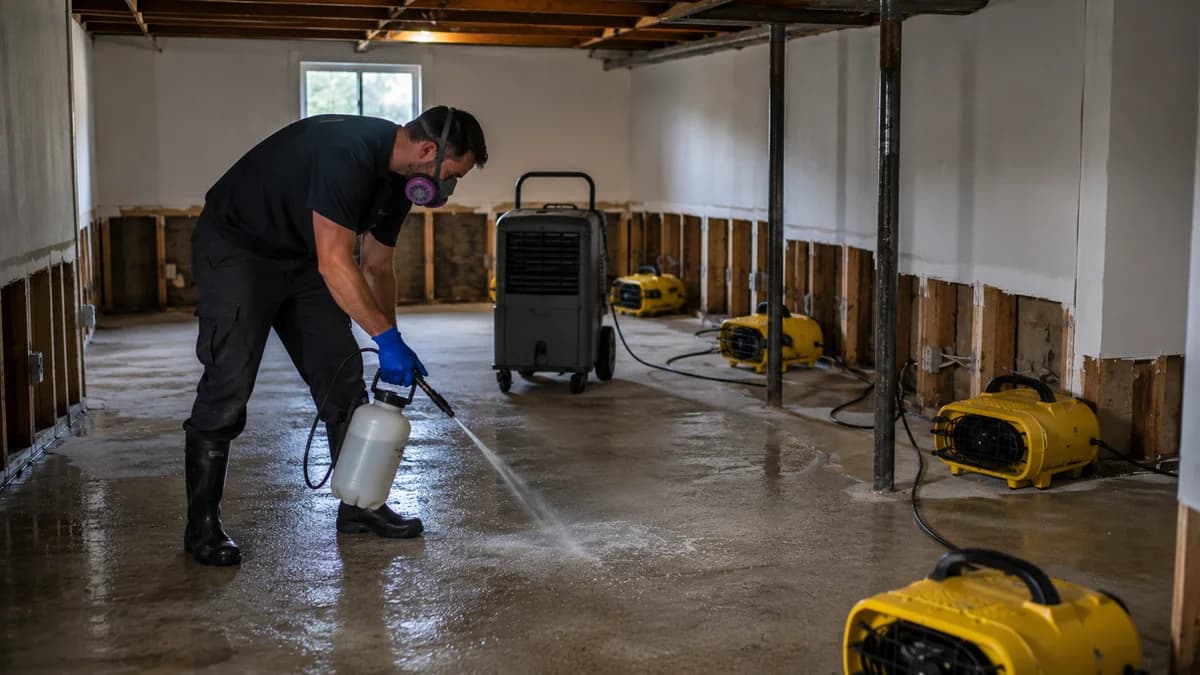
Affected areas are disinfected and deodorized, and a good restoration company documents the loss to insurer standards and bills your carrier directly, so in most covered claims you only pay your deductible.
How long does basement flood cleanup take?
One of the first questions homeowners ask is how long they will be living with the disruption. The honest answer is that it depends on how much water was involved, what it touched, and how quickly mitigation began, but most jobs follow a predictable rhythm.
Water extraction usually happens on day one. Structural drying typically takes three to five days, during which commercial equipment runs continuously and a technician returns daily to check moisture readings. Only once those readings confirm the structure is dry does any rebuilding begin. Reconstruction, which means replacing drywall, flooring, and finishes that could not be saved, varies with the scope, from a few days for a small area to a couple of weeks for a fully finished basement.
The main factor in that timeline is how fast drying begins. A basement that starts drying the same day as the flood comes back far sooner than one left saturated for a week. If it has already happened, you can book a free estimate and have a certified crew on-site within the hour.
How to prevent the next basement flood
Once the emergency is behind you, a few upgrades dramatically lower the odds of it happening again. Many are inexpensive relative to the cost of a single flood:
- Install a sump pump with a battery backup so it keeps running during power outages.
- Add a backwater valve to prevent sewer backups during heavy storms.
- Keep gutters clear and direct downspouts well away from the foundation.
- Seal foundation cracks and improve grading so water flows away from the house.
- Review your insurance for sewer-backup and overland-water coverage, which are often add-ons.
Related Restoration Services
Restoration Crews Near You
We respond 24/7 across the Greater Toronto Area. Find your city:
About the Author
Restoration Services GTA
IICRC Certified Firm
Restoration Services GTA is an IICRC Certified Firm handling water, fire, mould, asbestos, and storm damage across the Greater Toronto Area. Our lead technicians carry Water Damage Restoration (WRT), Applied Structural Drying (ASD), and Fire & Smoke Restoration (FSRT) certifications, and every article here is written from live job experience across GTA properties.
- IICRC Certified Firm
- IHSA COR Certified
- WSIB Ontario Covered
- EACO Member