
 Fire
FireA contained kitchen fire can leave smoke damage beyond the stove. Learn how cabinets, adjoining rooms, ventilation and water damage are assessed before cleanup and repairs begin.
In This Article
The flames were contained. How much restoration is needed?
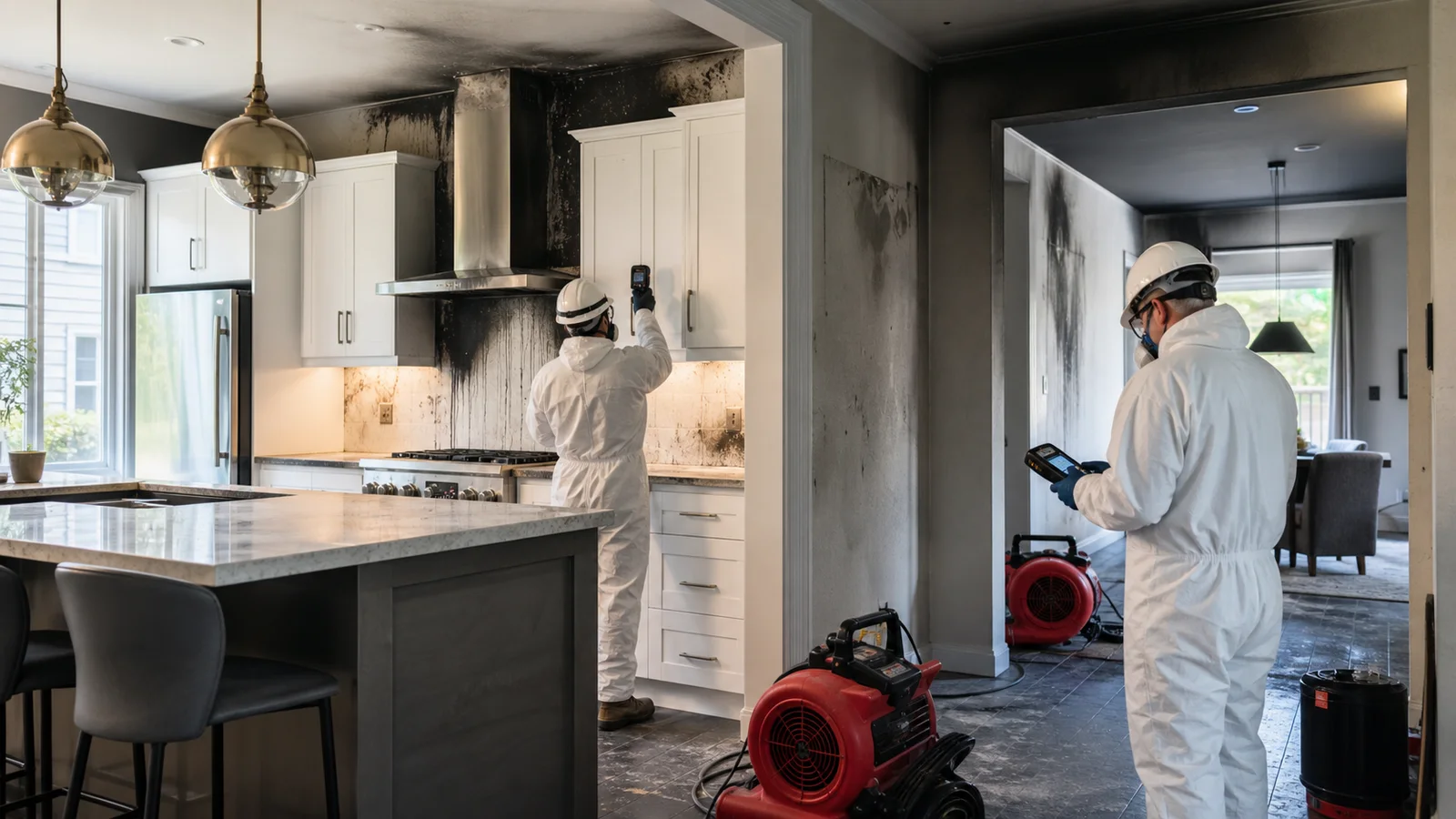
A kitchen fire does not have to burn through a room to leave a difficult cleanup. The range hood and cabinets may show obvious damage, while smoke residue or odour affects the living room, belongings or ventilation system. The first restoration decision is to establish the full affected area before choosing what to clean, repair or replace.
Restoration Services GTA provides fire and smoke damage restoration in Toronto and across the GTA. After a kitchen fire, the scope may include smoke and soot cleaning, contents assessment, drying water used in firefighting and repairs to damaged finishes. The inspection determines which of those services your property needs.
This guide focuses on the decisions specific to a kitchen loss. For the broader recovery sequence, read what to expect after a house fire.
Before cleaning: entry, utilities and food safety
If the fire is active, leave the building and call 911 from a safe place. Afterward, wait for the fire department or relevant authorities to permit entry, and follow any restrictions. Do not reconnect damaged appliances or restart affected utilities yourself.
The Canadian Red Cross home fire recovery guide covers safe return, damaged belongings and food disposal. Food exposed to heat, smoke, soot or firefighting water should be discarded. Do not taste it to decide whether it is safe.
Photograph damage only where access is permitted and safe. Contact your insurer promptly if you intend to claim, keep receipts and ask how to document necessary disposal. Ask what emergency work is authorized and what evidence is needed; do not assume a proposed repair is covered.
Why smoke damage assessment goes beyond the stove
Inspection should consider adjacent rooms and the routes smoke could have taken. In an open-plan kitchen, that includes the connected living space. In a Toronto condo, tell building management about the incident so any potential impact on common areas or building systems can be investigated.
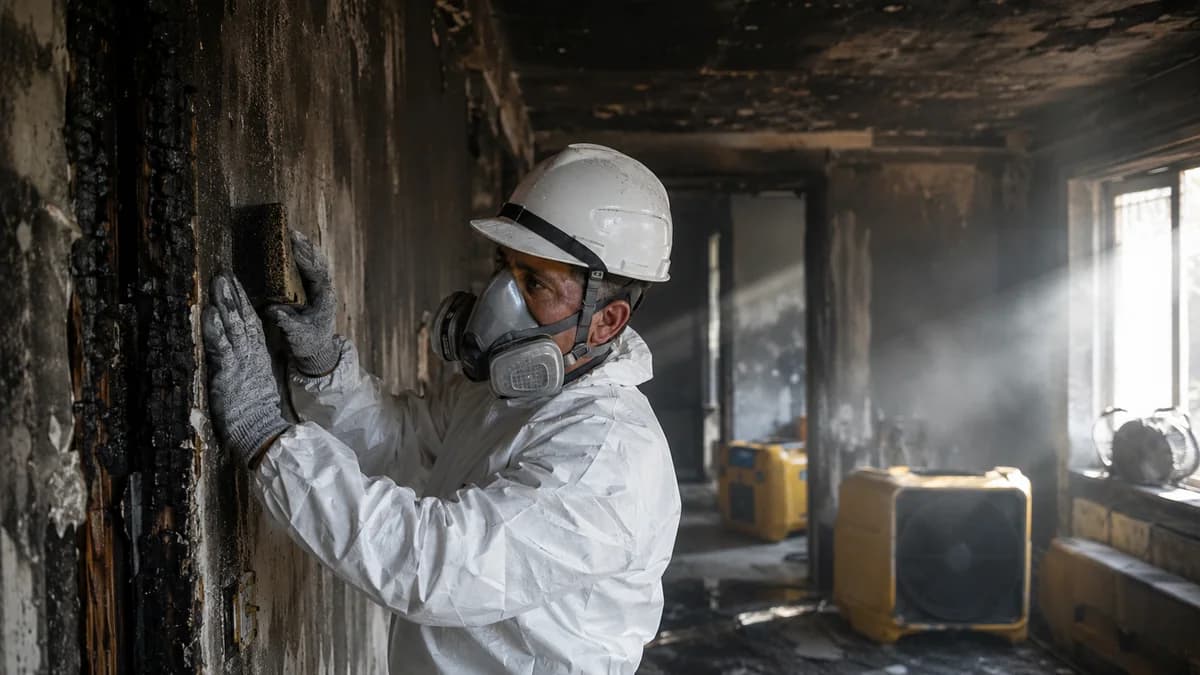
The ANSI/IICRC S700 overview describes assessing fire residues and odours in buildings, contents and systems such as heating and ventilation. This supports an inspection-led scope: neither cleaning only the visibly blackened area nor automatically replacing an entire ventilation system is a sound starting assumption.
| Area | What the assessment should clarify |
|---|---|
| Cabinets and range hood | Which surfaces have heat damage or residue, including interiors and less accessible edges? |
| Walls and ceilings | Where does residue extend, and can the existing finish be cleaned? |
| Adjoining rooms and belongings | Which items need cleaning, specialist assessment, temporary removal or disposal? |
| Ventilation and mechanical equipment | Is there evidence of impact that requires assessment by an appropriate specialist? |
| Floors and concealed cavities | Did firefighting water reach materials that need moisture checks or drying? |
Can kitchen cabinets and appliances be saved?
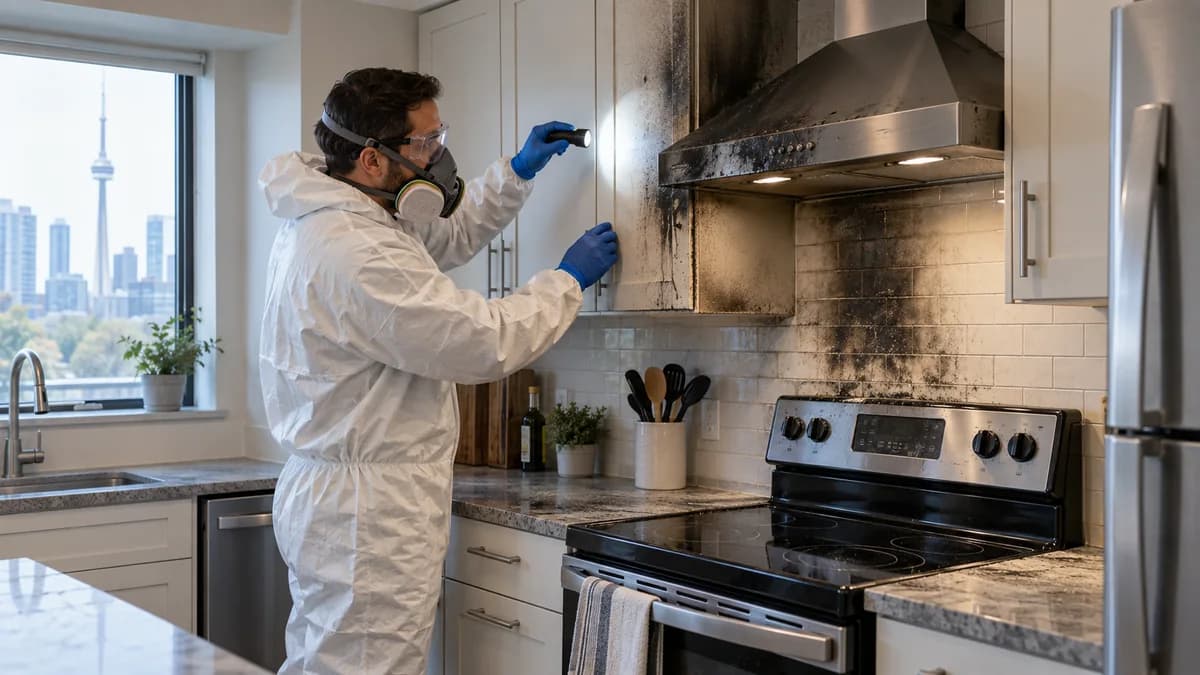
A useful estimate separates items that can be cleaned from items needing repair, replacement or further specialist evaluation. Avoid treating the whole kitchen as a single line item: the condition of a cabinet door can differ from its box, and an appliance needs a different assessment from a countertop.
Cabinets and finishes
Ask whether the proposed work includes cabinet interiors, undersides and the areas around the hood. Where cleaning is proposed, ask how the method will be tested on the finish and how the result will be assessed. If replacement is proposed, request the reason for each affected component and clarify whether matching existing doors or finishes is feasible.
Appliances and electronics
A surface cleaning estimate is not an appliance safety assessment. Ask who will inspect heat-, smoke- or water-affected equipment, whether the manufacturer needs to be consulted, and how repair or replacement recommendations will be documented.
Belongings and temporary storage
If contents need to leave the property, ask for an inventory, condition photographs and clear storage arrangements. Our contents pack-out service can support a restoration project when belongings need to be removed for assessment, cleaning or access to the work area.
Smoke odour removal and water damage need their own scope
Ask a contractor proposing odour treatment to explain which affected materials will first be cleaned or removed, what treatment is proposed and how the result will be checked. A fragrance or a newly painted wall does not establish that the affected materials have been addressed. The American Red Cross cleanup guidance notes that smoke odours and soot can be difficult to remove and may be best handled by professional fire restorers.
Our smoke and soot damage repair service covers assessment, cleaning and odour treatment. Ask for any occupancy restrictions associated with the proposed work and clear instructions for when the area may be used again.
Water used to extinguish the fire can create a second restoration task. If floors or wall cavities became wet, ask whether structural drying is included before new finishes are installed. Our water damage restoration timeline guide explains how drying and subsequent repairs are scheduled.
What affects kitchen fire restoration cost and timing?
The area affected by smoke, the number of belongings to assess and the extent of heat or water damage all influence the work. A kitchen requiring surface cleaning has a different schedule from one needing replacement cabinets, electrical work and flooring. Custom materials and trade coordination can extend the repair stage.
Request separate estimates for emergency stabilization, cleaning and contents work, and reconstruction. For a more detailed discussion of cost factors, see our Toronto fire damage restoration cost guide. A site-specific scope is needed before anyone can give a reliable price or completion date.
- What rooms and belongings are included in the smoke damage scope?
- Which decisions depend on test cleaning or specialist inspection?
- Is water extraction or drying included?
- Who coordinates appliance assessment and any required trade work?
- What could change the price, and how will changes be approved?
- What remains to be checked before the kitchen can be used again?
Get help with kitchen fire damage in Toronto and the GTA
When you call, explain where the fire started, whether entry has been permitted, which rooms appear affected and whether water was used to extinguish it. Mention any building-management access requirements. These details help us prepare for the assessment.
Restoration Services GTA offers 24/7 emergency assistance for fire damage restoration in Toronto, North York, Scarborough, Mississauga, Vaughan and the wider GTA. Call (416) 639-6242 to discuss current availability, or request a fire damage estimate for an assessment and a clear cleanup and repair scope.
Related Restoration Services
Restoration Crews Near You
We respond 24/7 across the Greater Toronto Area. Find your city:
About the Author
Restoration Services GTA
IICRC Certified Firm
Restoration Services GTA is an IICRC Certified Firm handling water, fire, mould, asbestos, and storm damage across the Greater Toronto Area. Our lead technicians carry Water Damage Restoration (WRT), Applied Structural Drying (ASD), and Fire & Smoke Restoration (FSRT) certifications, and every article here is written from live job experience across GTA properties.
- IICRC Certified Firm
- IHSA COR Certified
- WSIB Ontario Covered
- EACO Member