
 Fire
FireThe fire is out, but the recovery is just beginning. This guide walks through every stage — from securing the property to the final rebuild — with timelines, soot types, and how to protect your insurance claim.
In This Article
The fire is out — now what?
When the fire department leaves, most homeowners are left in front of a property that no longer feels like home, unsure what to do first. It's one of the most overwhelming moments anyone can face. The good news is that the recovery follows a well-defined path, and knowing the steps ahead of time takes some of the fear out of it.
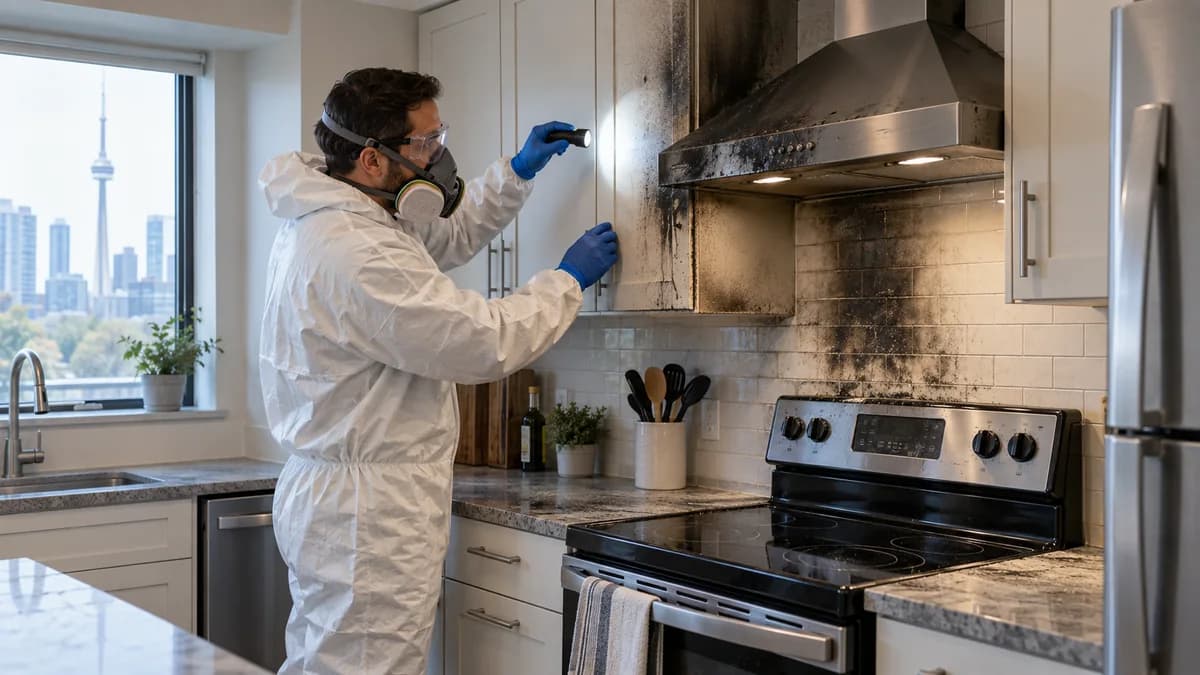
A house fire causes several kinds of damage at once — flames, smoke, acidic soot, and the water used to put the fire out — and each one needs a different response. This guide covers the entire process end to end: securing the property, the restoration steps, realistic timelines, how smoke and soot are cleaned, and how to protect your insurance claim. Restoration Services GTA handles all of it with fire and smoke damage restoration, 24/7 across the Greater Toronto Area.
The first 24 to 48 hours: safety and securing the property
The immediate priority after a fire is safety and stopping further loss. A fire-damaged home is often left wide open — broken windows, a burned-through roof, or a door the fire department forced — which exposes what's left to weather, animals, and intruders.
- Do not re-enter the home until the fire department confirms it is structurally safe.
- Contact your insurance company to open a claim as soon as you're able.
- Call a licensed restoration company to begin emergency stabilization and documentation.
- Arrange emergency board-up and roof tarping to secure the property right away.
Why board-up comes first
Before any cleaning or rebuilding, the property has to be sealed. Our emergency board-up and tarping keeps rain, snow, and trespassers out, which prevents a second wave of water and theft damage on top of the fire — and shows your insurer you took reasonable steps to limit the loss.
The four types of fire damage
Understanding what you're dealing with helps the whole process make sense. A single fire produces four distinct types of damage, and a proper restoration addresses all of them — not just the obvious burn marks.
| Type of Damage | What Causes It | What It Affects | How It's Handled |
|---|---|---|---|
| Flame & heat | Direct contact with fire | Structure, framing, and finishes | Controlled demolition and reconstruction |
| Smoke | Airborne smoke spreading through the home | Walls, ceilings, contents, HVAC — even distant rooms | HEPA cleaning and deodorization |
| Soot & residue | Particles settling on surfaces | Glass, metal, finishes, and electronics | Specialized cleaning by residue type |
| Water | Firefighting and suppression | Floors, drywall, subfloor, and basement | Extraction and structural drying |
The fire restoration process, step by step
Once the property is secured, a full restoration follows a clear sequence. The same accountable team should handle every stage so nothing falls through the cracks between the cleanup and the rebuild.
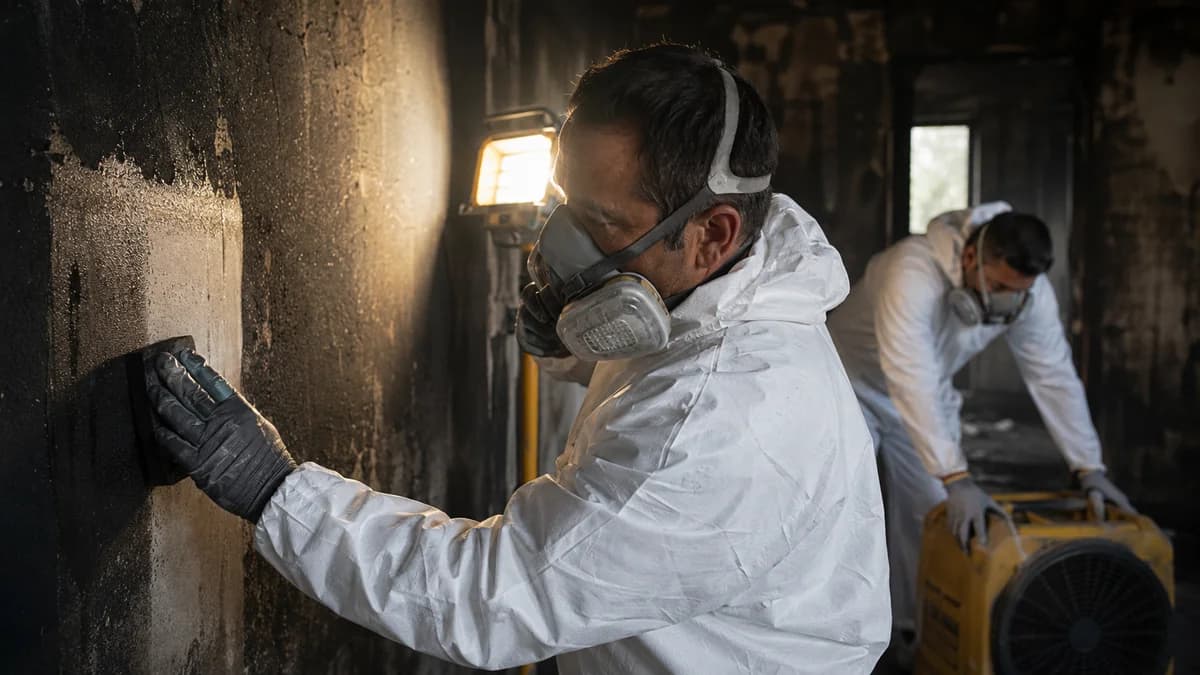
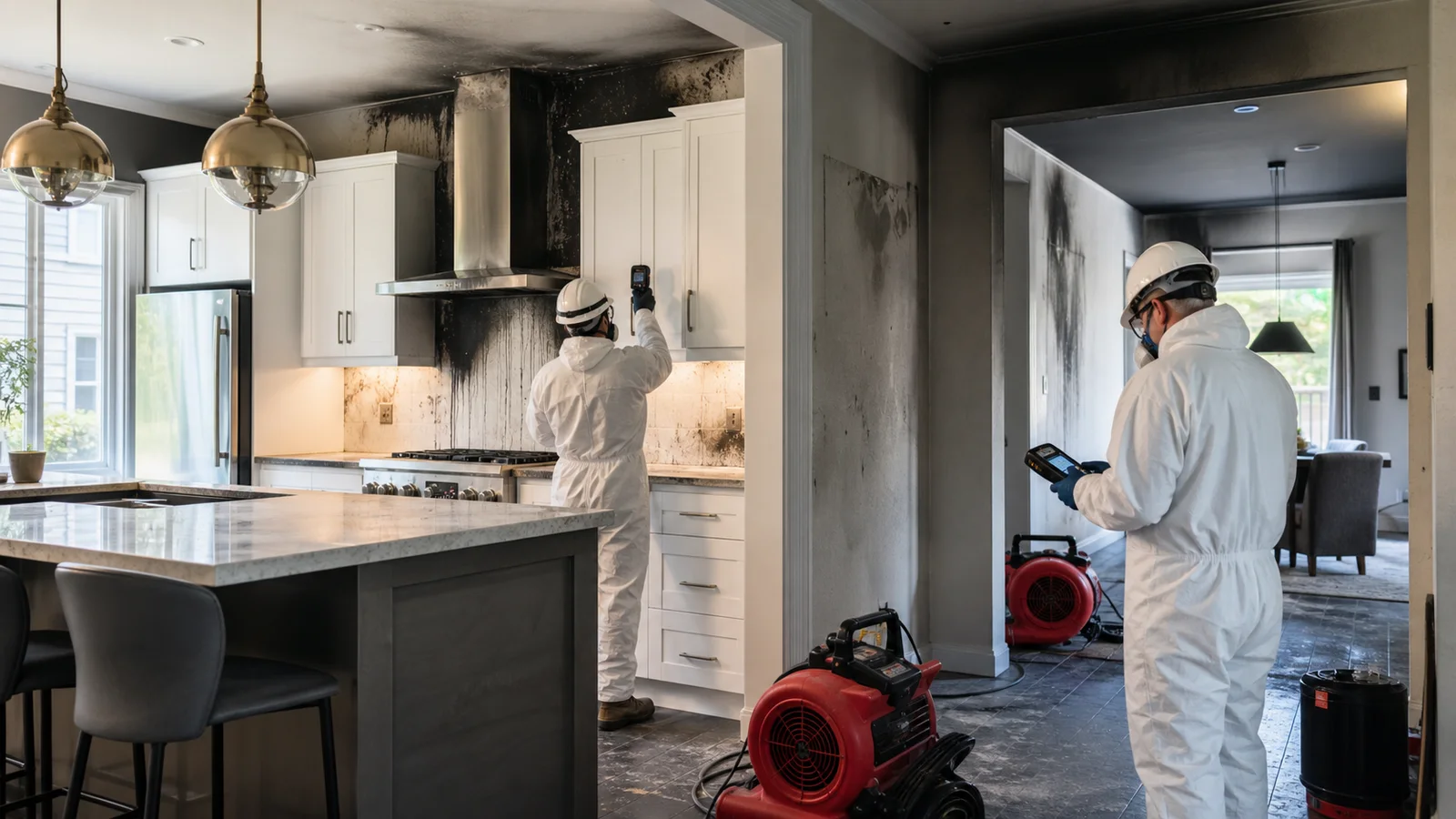
- 1Assessment and documentation — inspect the full extent of fire, smoke, soot, and water damage and document everything to insurer standards.
- 2Board-up and tarping — secure openings and cover the roof to stop further weather and security loss.
- 3Water removal and drying — extract firefighting water and dry the structure before it becomes a mould problem.
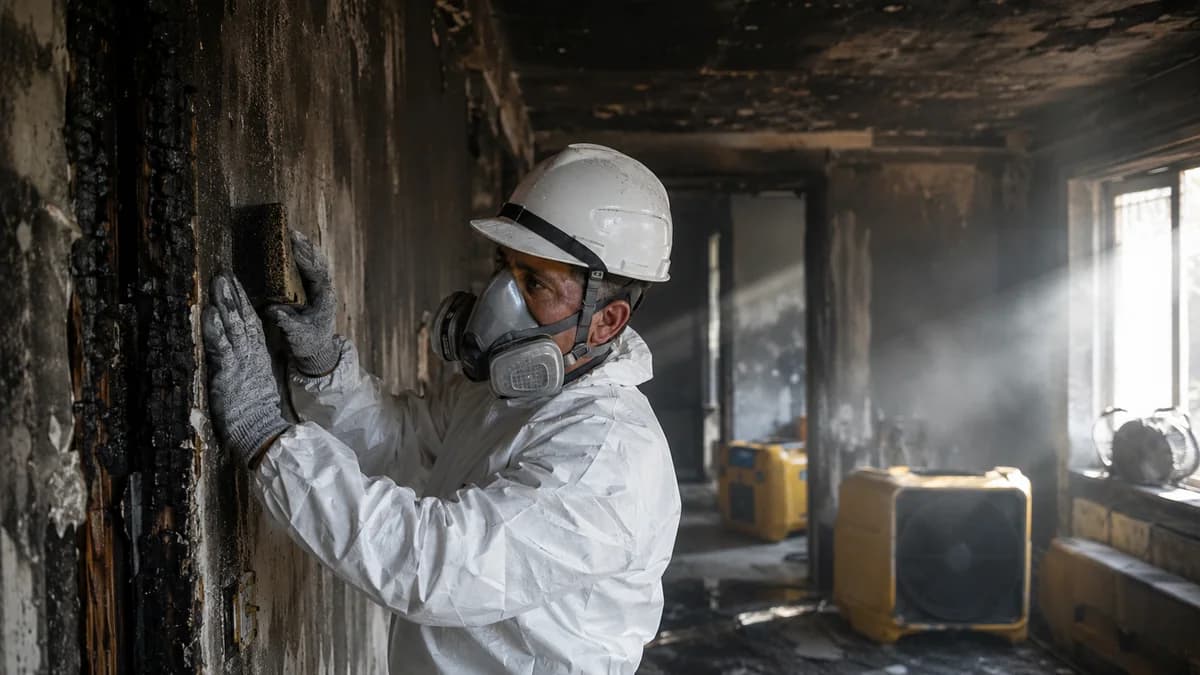
- 4Soot and smoke cleaning — clean every affected surface using the method matched to each residue type.
- 5Odor neutralization — eliminate smoke odor at the molecular level with HEPA scrubbing, ozone or hydroxyl treatment, and thermal fogging.
- 6Reconstruction — rebuild the damaged areas, from drywall and flooring to trim and paint.
- 7Final inspection — a detailed walkthrough to confirm the home is restored to pre-loss condition.
Contents inventory and pack-out
Alongside the structural work, your belongings are inventoried and — where useful — packed out for specialized off-site cleaning through contents pack-out services. This protects them from ongoing soot and clears the site so the rebuild moves faster.
How long does fire restoration take?
This is the question every homeowner asks, and the honest answer is that it depends on the severity of the fire. The table below gives realistic ranges — your restoration company will confirm a schedule after assessing the loss.
| Fire Severity | What's Involved | Typical Timeline |
|---|---|---|
| Minor | Limited smoke, no structural damage, surface cleaning and deodorizing | 1–2 weeks |
| Moderate | Firefighting water, significant smoke penetration, some structural repair | 3–5 weeks |
| Severe | Major structural damage, extensive rebuild, full contents restoration | 6–12+ weeks |
Can my belongings be saved?
Many belongings can be recovered, even after significant smoke exposure. Rather than throwing everything away, a restoration company inventories your contents, packs out what can be saved for specialized off-site cleaning, and documents anything that can't be restored for your claim.
- Textiles and clothing — specialized laundering and ozone treatment
- Furniture and hard goods — surface cleaning and deodorization
- Electronics — corrosion removal and testing by specialists
- Documents and photos — freeze-drying and restoration where possible
Fire damage and your insurance claim
Fire and smoke damage is covered under virtually every standard property insurance policy, but fire claims are among the most complex — they involve the structure, contents, odor, and often water damage all at once. The paperwork, not the coverage, is usually the hard part.
We take that weight off your shoulders. We document the loss to insurer standards from the first visit, produce a detailed scope using the estimating software adjusters recognize, and bill your carrier directly. In most covered claims, the only cost you pay out of pocket is your deductible.
How to choose a fire restoration company
The company you hire has a huge impact on how smoothly — and how affordably — your recovery goes. Fire restoration is specialized work, so look for these signs of a company that can genuinely see the job through.
- 24/7 emergency response with fast on-site arrival to secure the property.
- IICRC certification, proper licensing, and insurance you can verify.
- Handles the full job in-house — mitigation, cleaning, and reconstruction — so there's no handoff gap.
- Bills your insurer directly and coordinates with your adjuster.
- Provides a clear, documented scope and is willing to share references.
Why one accountable team matters
Splitting a fire job between a cleanup crew and a separate contractor for the rebuild is where delays and finger-pointing creep in. When the same team that mitigated the loss also rebuilds it, nothing gets re-explained and nothing falls through the cracks. If you're facing a fire loss right now, book a free estimate and we'll walk you through the entire process, start to finish.
Related Restoration Services
Restoration Crews Near You
We respond 24/7 across the Greater Toronto Area. Find your city:
About the Author
Restoration Services GTA
IICRC Certified Firm
Restoration Services GTA is an IICRC Certified Firm handling water, fire, mould, asbestos, and storm damage across the Greater Toronto Area. Our lead technicians carry Water Damage Restoration (WRT), Applied Structural Drying (ASD), and Fire & Smoke Restoration (FSRT) certifications, and every article here is written from live job experience across GTA properties.
- IICRC Certified Firm
- IHSA COR Certified
- WSIB Ontario Covered
- EACO Member