
 Storm
StormThe September 2 storm brought golf ball hail, 110 km/h gusts, and flooding across the GTA. Here is how to check your property safely, what to document, and which damage has a clock on it.
In This Article
What the September 2 storm actually did
On Wednesday, September 2, 2026, Environment Canada issued a red warning for an extremely dangerous thunderstorm and sent an emergency alert to phones across the Greater Toronto Area, warning of destructive winds and very large hail. Tornado watches went up for Hamilton, Burlington, Oakville, and parts of southwestern Ontario. The City of Toronto activated its emergency operations centre.
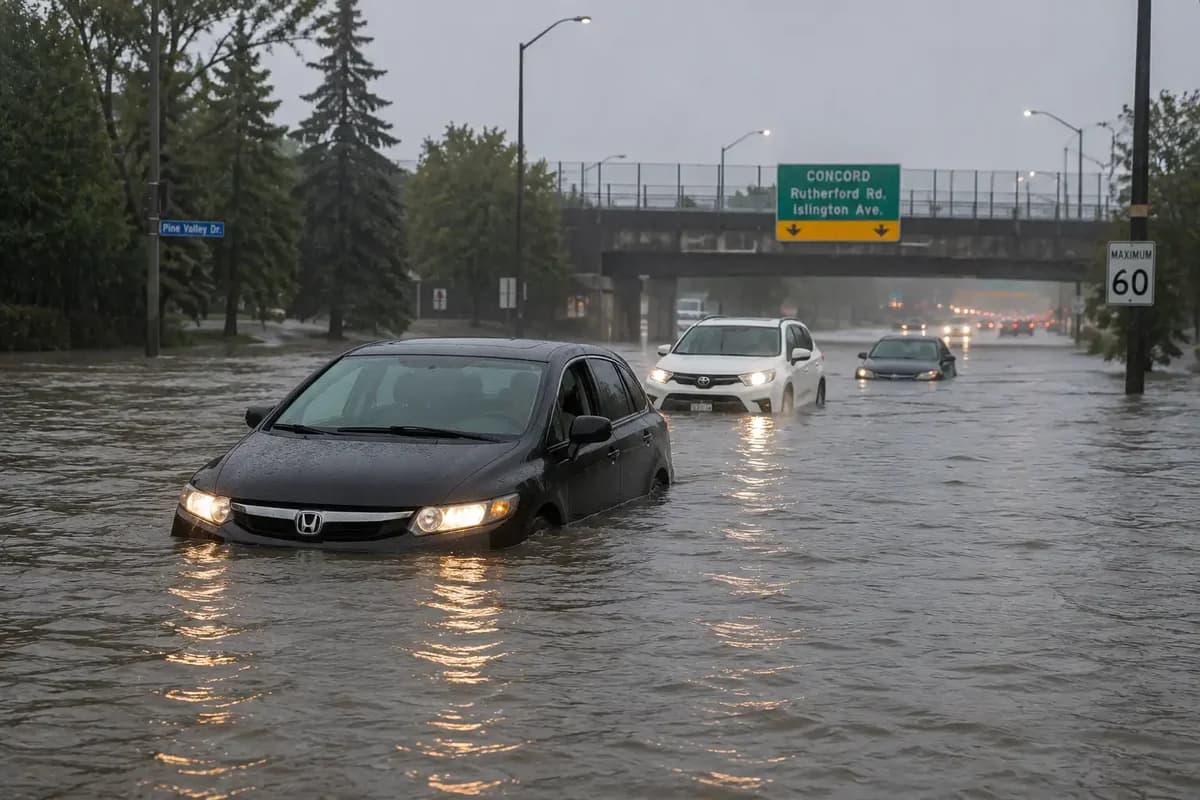
The storm delivered on the warning. Hail ranged from quarter-sized to golf ball-sized and larger, wind gusts exceeded 110 km/h in places, and the Toronto and Region Conservation Authority measured up to 59 mm of rain in some watersheds. Around 65,000 Toronto Hydro customers lost power at the peak, with 45,000 still out at 8 p.m. The Don Valley Parkway closed in both directions, along with the eastbound Gardiner at Jarvis, southbound Allen Road at Lawrence, and Lake Shore Boulevard West. Rain came through the ceiling in the PATH.
Storm damage is not one problem, it is several arriving together, and they do not all move at the same speed. Some of what the storm did to your property is cosmetic and can wait for a contractor's schedule. Some of it is actively getting worse right now. The point of this guide is telling those apart.
Before you inspect anything
More people are hurt in the hours after a storm than during it. Work through this before you start looking at damage.
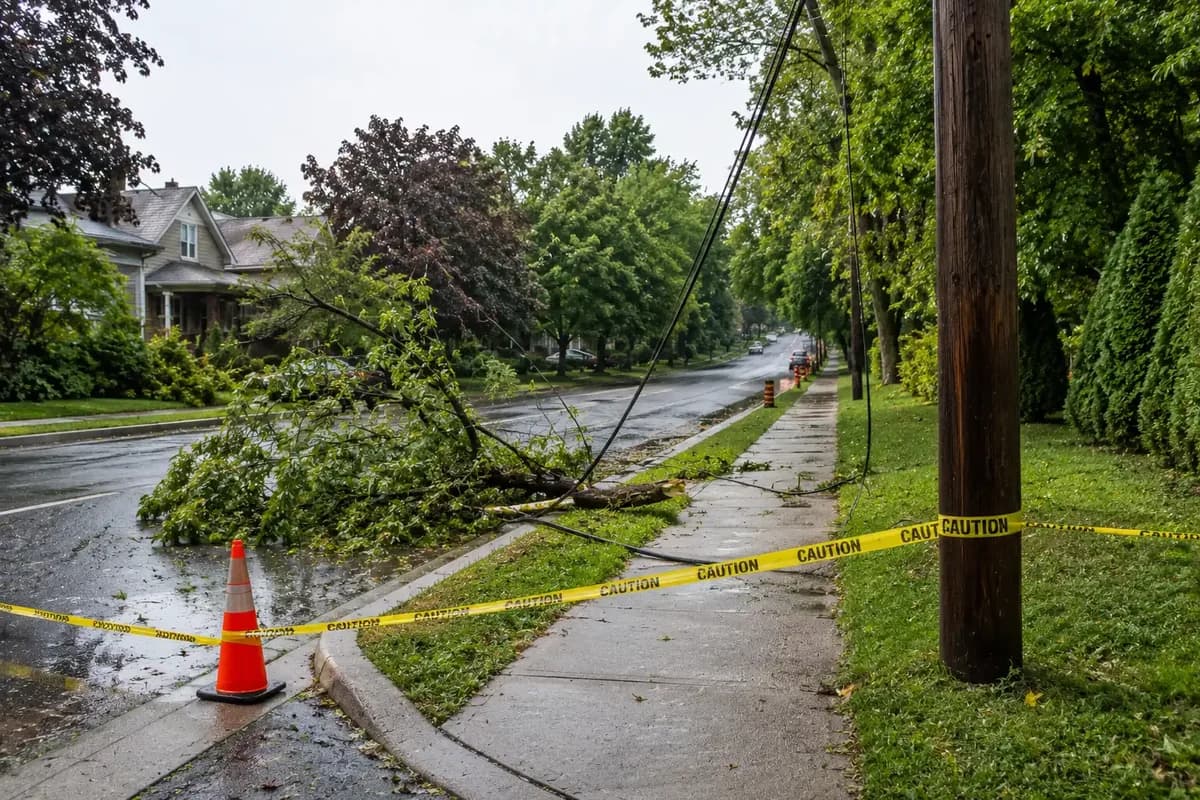
- 1Treat every downed or dangling wire as live, including cable and telephone lines that have been contacted by a power line. Stay back the length of a bus and call 911 or your utility.
- 2Do not go on the roof. Post-storm roofs are wet, may have hidden structural damage, and are the leading cause of serious injury after severe weather. Inspect from the ground with binoculars or a phone camera zoom.
- 3Stay out of standing water in a basement until you have confirmed power to that area is off at the breaker, and never wade in to reach a breaker panel.
- 4Check for gas odour before re-entering an enclosed space. If you smell gas, leave, and call from outside.
- 5Look up before walking the property. Partially broken limbs come down without warning, sometimes a day or two later.
- 6If a tree is on the structure or on a line, do not attempt removal yourself. That is a crane and utility coordination problem, not a chainsaw problem.
What to check, in the order that matters
Work from the fastest-moving damage to the slowest. Water first, because it is the only one with a biological clock attached.
1. Water inside the building
Check the basement, then every ceiling below the roofline, then around windows on the side the wind came from. You are looking for standing water, damp drywall, sagging or discoloured ceilings, and that distinctly musty smell.
If water got in, this is the one thing that cannot wait. Mould can establish within 24 to 48 hours, so a basement that flooded on September 2 is at the edge of that window now. Start with flooded basement cleanup, and if the water came up through a floor drain rather than in from outside, treat it as contaminated and read our Vaughan flooding guide on why that changes the whole job.
2. The roof, from the ground
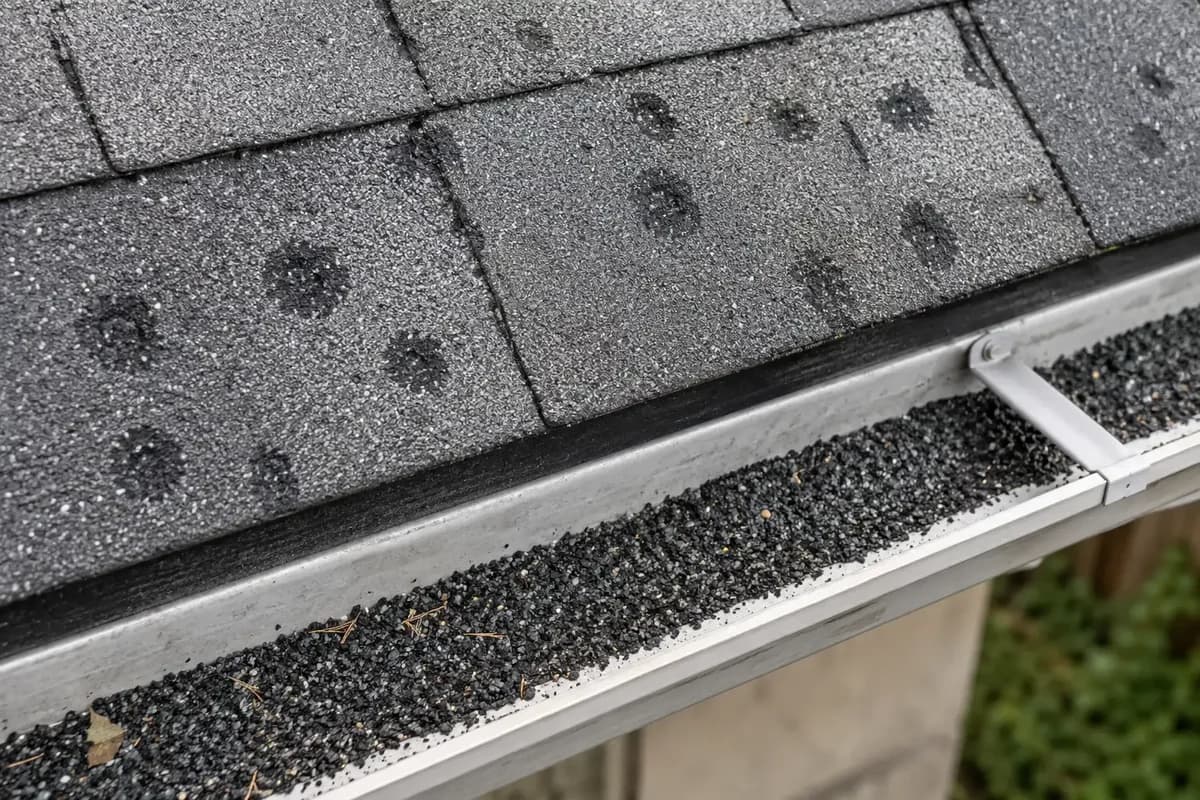
Look for missing, lifted, or cracked shingles, granules washed into the gutters or collected at the downspout outlet, dented or split vents and flashing, and any daylight visible in the attic. Hail bruising is often invisible from the ground while still having ended the shingle's remaining service life, which is why a documented professional inspection matters after a hail event of this size.
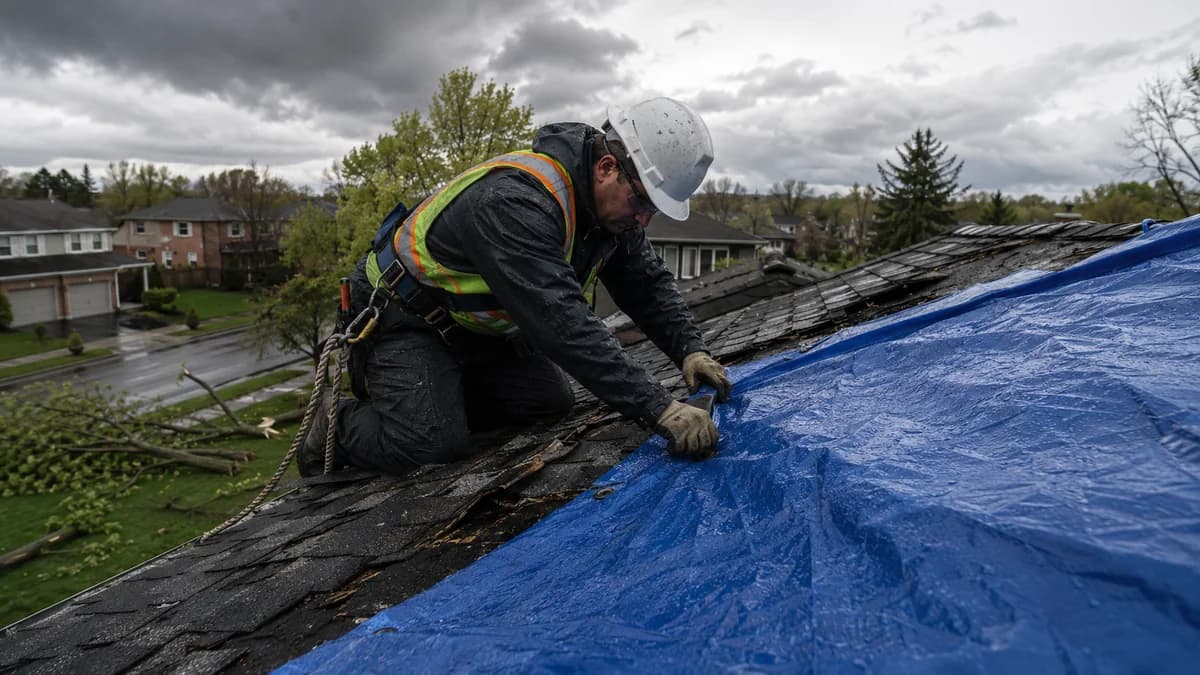
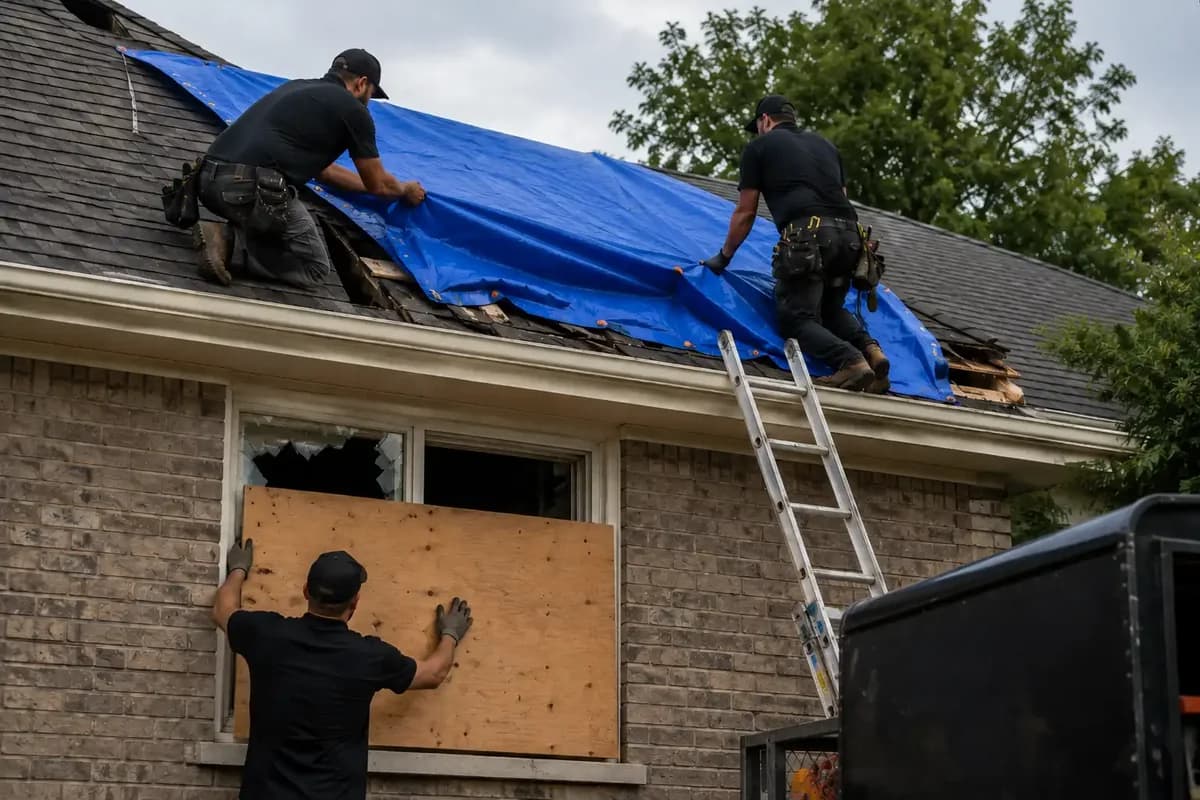
If the roof is open to the weather, tarping is urgent and comes before any repair discussion. That is board-up and tarping, and it is what stops the next rainfall turning a roof claim into a full interior claim.
3. Windows, siding, and the building envelope
Golf ball-sized hail cracks window glass, punctures vinyl siding, and dents aluminum, soffit, and eavestrough. Check the storm-facing elevation first. Broken glazing needs boarding the same day, both to keep weather out and because an open building is an insurance and security problem.
4. Trees, fences, and debris
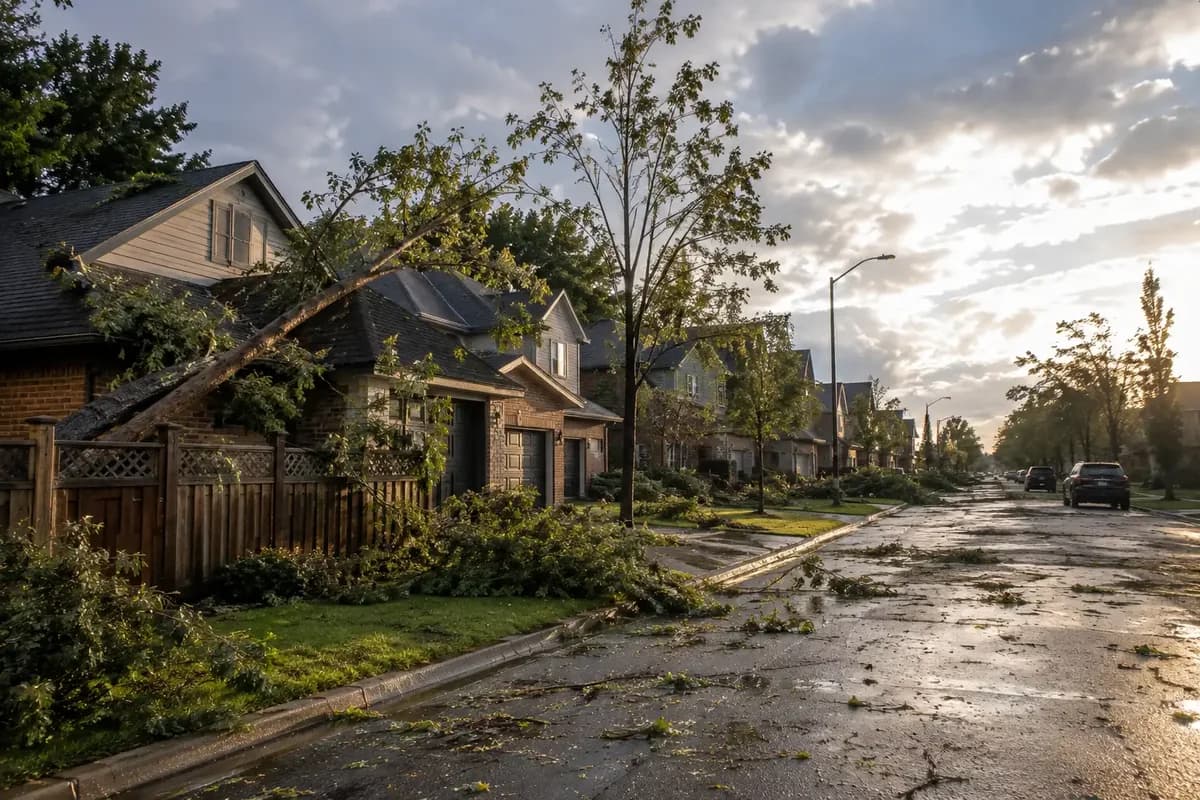
This is the most visible damage and usually the least urgent, unless a limb is resting on the structure or a line. Photograph it, keep people away from anything unstable, and book debris removal once the higher-priority items are handled.
5. What the power outage did on its own
An outage that long causes damage of its own. A sump pump without a battery backup stopped working during the exact hours it was needed most, which is how a lot of basements flooded on September 2 without a single drop coming through the walls. Freezers and fridges lost their contents, and spoiled food is a claimable loss under most policies. Sensitive electronics can also be damaged by the surge when power returns rather than when it goes out.
Document it properly, before you clean up
After a storm this widespread, insurers process a surge of claims at once and adjusters take longer to attend. Your own documentation is what keeps your claim moving and what settles disagreements later.
- Photograph and video every affected area before moving or discarding anything, from wide shots that establish the room down to close-ups of specific damage.
- Capture the date. A timestamp, or a phone screen showing the date in one frame, ties the damage to September 2 rather than to some undated prior event.
- Photograph serial numbers and model plates on damaged appliances, furnaces, and electronics.
- Keep receipts for everything, including hotel nights, meals if you are displaced, a rental pump, an emergency plumber, tarps, and spoiled groceries.
- Write down what happened while it is fresh: the time water appeared, where it came in, when the power went out and came back.
- Do not throw out damaged contents until they have been photographed and, where possible, seen by the adjuster. Damaged items are the evidence.
- Report the loss promptly. Most policies require notice without unreasonable delay, and the surge is not an excuse the insurer has to accept.
Watch out for storm chasers
Within 48 hours of a storm like this, the GTA fills with out-of-town crews going door to door. Some are legitimate. Many are not, and roofing and restoration are the two trades they target hardest, because the damage is urgent and hard for a homeowner to assess.
The tells are consistent. Pressure to sign immediately, a large deposit up front, an offer to cover or waive your deductible, which is insurance fraud in Ontario and exposes you as well as them, no local address, no WSIB clearance, and a contract that assigns your insurance benefits to them. Ask for the certifications, ask for proof of WSIB coverage, and check that the company existed before the storm did.
Getting ahead of the next one
September storms of this intensity are no longer unusual in southern Ontario, and the practical response is the boring one. A sump pump with a battery backup, a back-water valve where sewer surcharge is the local failure mode, clear eavestroughs and downspouts discharging well away from the foundation, and trees pruned before the season rather than after it.
Our guide on preparing your GTA home for storm season covers the full checklist, and if you are in Toronto proper it is worth reading what the City's basement flooding subsidy covers, currently up to $6,650 per property. York Region and Peel run their own smaller programs on different terms.
If the September 2 storm damaged your property, our IICRC-certified crews respond across the GTA 24 hours a day for storm damage restoration, from emergency tarping and board-up through water extraction, drying, and full reconstruction. Everything is documented to insurer standards from the first visit and billed directly to your carrier. Book a free estimate and we will be on site within the hour.
Related Restoration Services
Restoration Crews Near You
We respond 24/7 across the Greater Toronto Area. Find your city:
About the Author
Restoration Services GTA
IICRC Certified Firm
Restoration Services GTA is an IICRC Certified Firm handling water, fire, mould, asbestos, and storm damage across the Greater Toronto Area. Our lead technicians carry Water Damage Restoration (WRT), Applied Structural Drying (ASD), and Fire & Smoke Restoration (FSRT) certifications, and every article here is written from live job experience across GTA properties.
- IICRC Certified Firm
- IHSA COR Certified
- WSIB Ontario Covered
- EACO Member