
 Asbestos
If your GTA home was built before the mid-1990s, that renovation could disturb hidden asbestos. Here's when to test, where it hides, and why it matters before you pick up a hammer.
In This Article
The short answer: if your home is older, yes
Asbestos was used in thousands of building products right up until the mid-1990s, which means a large share of homes across the Greater Toronto Area still contain it. As long as it stays intact and undisturbed, it's relatively low-risk. The problem is that renovation is exactly the kind of activity that disturbs it — cutting, drilling, sanding, and demolition all release microscopic fibres that are dangerous to breathe.
That's why the safe rule is simple: if your home was built or last renovated before the mid-1990s, test suspect materials before you start any demolition. Asbestos testing and removal done first protects your family and keeps your project compliant.
Why asbestos is dangerous when disturbed
Asbestos fibres are too small to see, and they don't cause symptoms right away — which is exactly what makes them dangerous. When inhaled, they lodge in the lungs and can cause serious disease decades later. The risk is almost entirely tied to whether the material is disturbed and becomes airborne.
- Intact, undisturbed asbestos generally poses a low immediate risk.
- Cutting, drilling, sanding, or demolition releases fibres into the air.
- Airborne fibres are invisible, odorless, and easily inhaled.
- A DIY renovation can contaminate your entire home before you realize it.
Never disturb suspect material yourself
The safest rule is simple: avoid disturbing suspect material until it has been tested. Testing first, before any demolition, is always the safe and legally responsible move — and it is inexpensive compared to cleaning up a contaminated home.
Where asbestos hides in older GTA homes
If your home predates the mid-1990s, asbestos could be present in a surprising number of places. These are the most common spots we test before a renovation:
| Suspect Material | Where It's Found | Commonly Disturbed By |
|---|---|---|
| Vermiculite attic insulation | Attics | Adding insulation, running wiring |
| Pipe and duct wrap | Basements and mechanical rooms | Plumbing and HVAC work |
| Vinyl floor tiles and adhesive | Kitchens, bathrooms, basements | Removing or sanding floors |
| Popcorn and textured ceilings | Ceilings throughout the home | Scraping or drilling |
| Drywall joint compound and plaster | Walls and ceilings | Demolition and sanding |
| Cement board, siding, and shingles | Exterior and wet areas | Cutting or drilling |
How testing and removal work
Asbestos testing is quick and non-destructive, and if removal is needed, it's regulated, specialized work — not something a general contractor should improvise.
Sampling and lab analysis
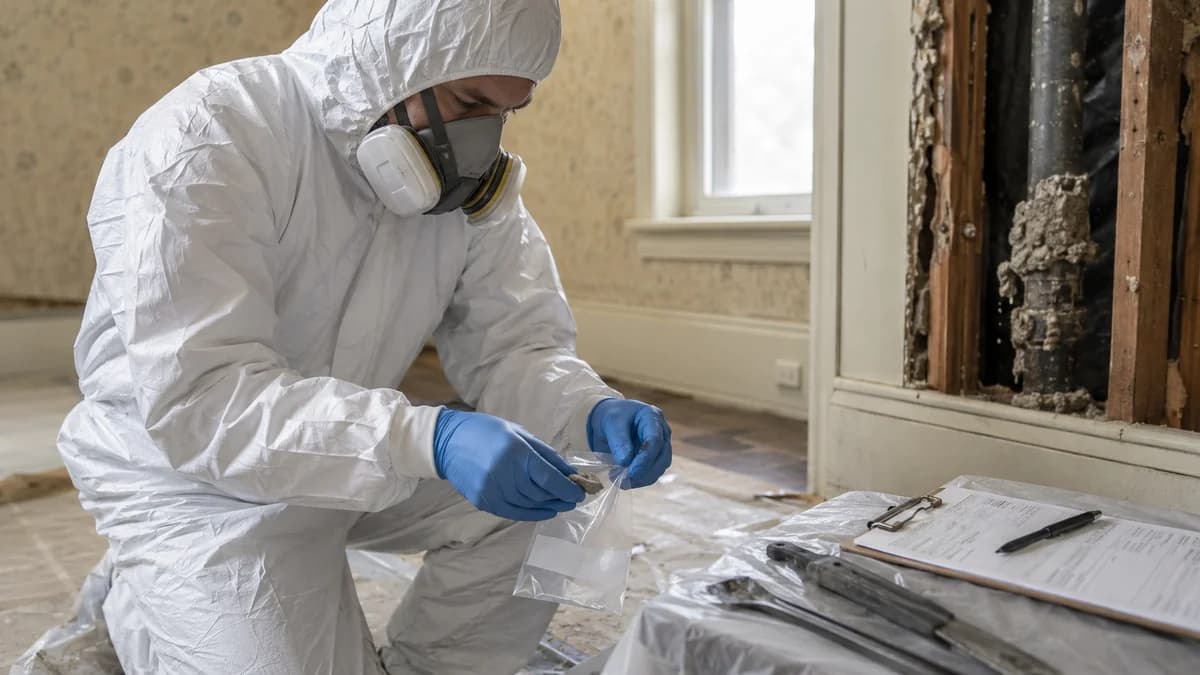
We safely collect small samples of suspect materials and have them analyzed by an accredited lab to confirm whether asbestos is present and at what concentration — removing the guesswork before you renovate.
Licensed, contained removal
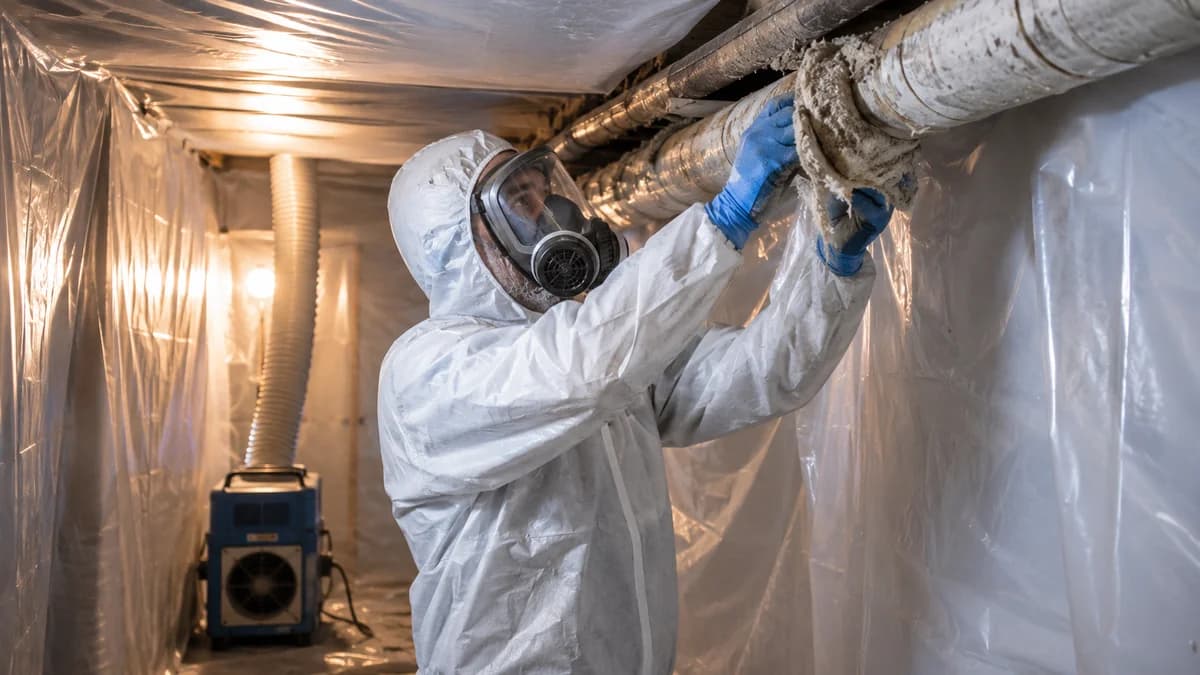
If abatement is needed, trained crews build a sealed containment with negative-air HEPA filtration, wet down and carefully remove the material, and dispose of it at an approved facility — following provincial protocols at every step.
Clearance documentation
After removal, the area is cleaned and cleared, and you receive documentation confirming it's safe to reoccupy — important for renovations, sales, and your own peace of mind.
Don't forget lead paint
Asbestos isn't the only hazard hiding in older homes. Lead paint is common in properties built before the late 1970s, and sanding or scraping it during a renovation releases lead dust that's especially harmful to children. We can test for lead alongside asbestos with our lead testing service, so your project is safe on both fronts before work begins.
Test first, renovate with confidence
The cost of testing before a renovation is small next to the cost — financial and health — of disturbing asbestos unknowingly. It protects your family, keeps your project compliant with provincial rules, and avoids the nightmare of shutting down a contaminated job site midway through.
Planning a renovation in an older GTA home? Book a free estimate and we'll test the suspect materials before you pick up a hammer.
Related Restoration Services
Restoration Crews Near You
We respond 24/7 across the Greater Toronto Area. Find your city:
About the Author
Restoration Services GTA
IICRC Certified Firm
Restoration Services GTA is an IICRC Certified Firm handling water, fire, mould, asbestos, and storm damage across the Greater Toronto Area. Our lead technicians carry Water Damage Restoration (WRT), Applied Structural Drying (ASD), and Fire & Smoke Restoration (FSRT) certifications, and every article here is written from live job experience across GTA properties.
- IICRC Certified Firm
- IHSA COR Certified
- WSIB Ontario Covered
- EACO Member