
Toronto · Restoration Services
Mold Removal and Remediation in North York
Certified mould inspection, containment, and remediation across North York, with the moisture source fixed so it does not come back.
(416) 639-624224/7 Emergency Dispatch
Request a Free Mold Remediation Quote in North York
No obligation. Certified crews on-site within the hour. We bill your insurer directly.
- IICRC-certified
- Direct insurance billing
- 24/7 dispatch
Mold Remediation
The postwar housing stock here is the issue: original insulation, limited attic ventilation, and finished basements added decades after the build, which traps moisture against framing that was never detailed to dry out.
Restoration Services GTA handles mould inspection and remediation throughout North York, from Willowdale, Don Mills, and Bayview Village outward. Our IICRC-certified crews find the moisture feeding the growth, isolate the area under negative-air containment, remove what has been colonized, and document the completed work from inspection to rebuild.
How It Works
Our Mold Remediation Process in North York
Inspection
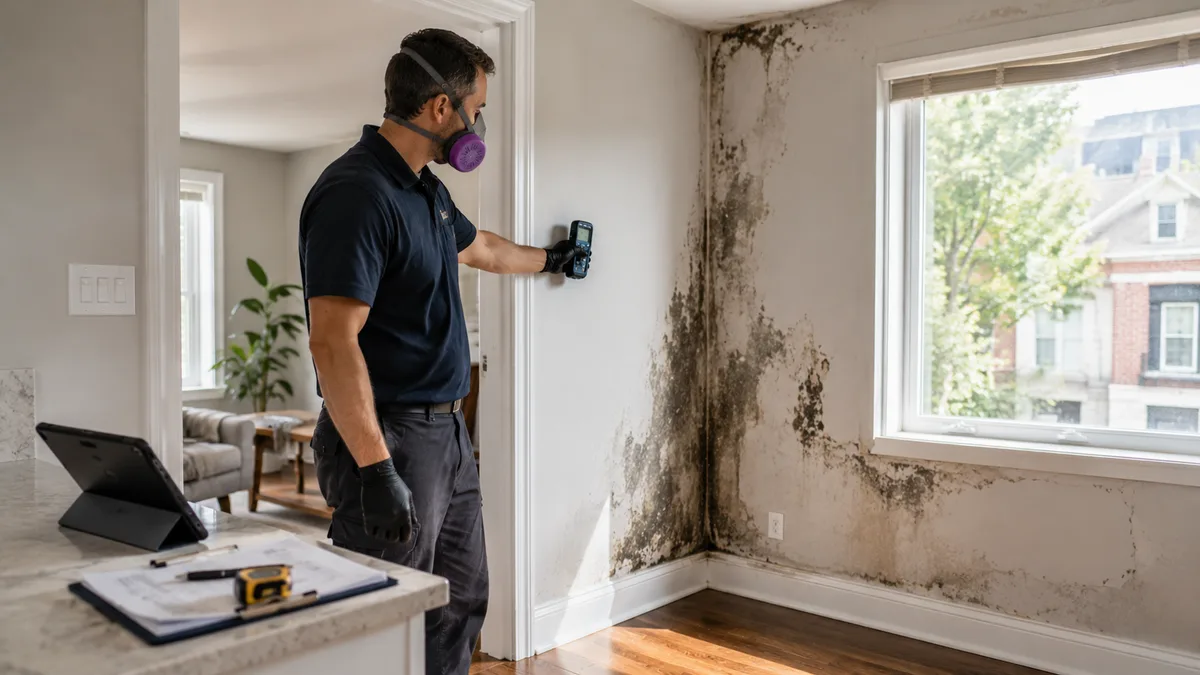
We inspect the property with moisture meters and thermal imaging to trace the moisture source and map every area affected, including hidden growth.
Containment
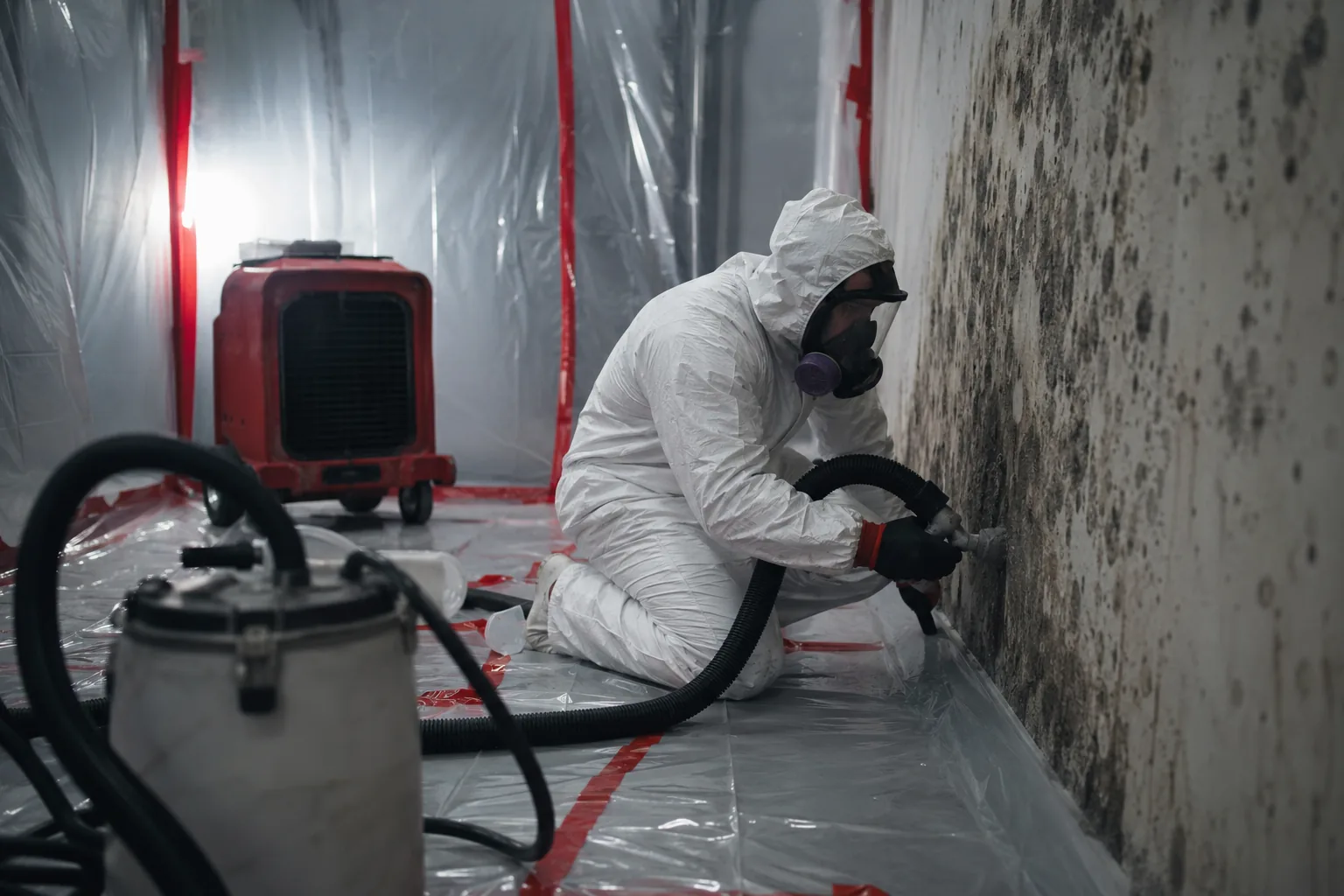
We seal off the work area with physical barriers and negative-air HEPA machines so spores are captured rather than spread through the building.
Removal & Cleaning
Mould is physically removed from affected materials, surfaces are HEPA-vacuumed and treated with antimicrobials, and contaminated porous materials are disposed of.
Final Check & Restoration
We complete a documented final inspection of the treated areas, then restore any removed drywall, insulation, and finishes.
Mold Removal Across North York
We remediate mould for homeowners, condo owners, landlords, and businesses across North York, from small contained bathroom and closet jobs through to full basement and attic remediation with reconstruction.
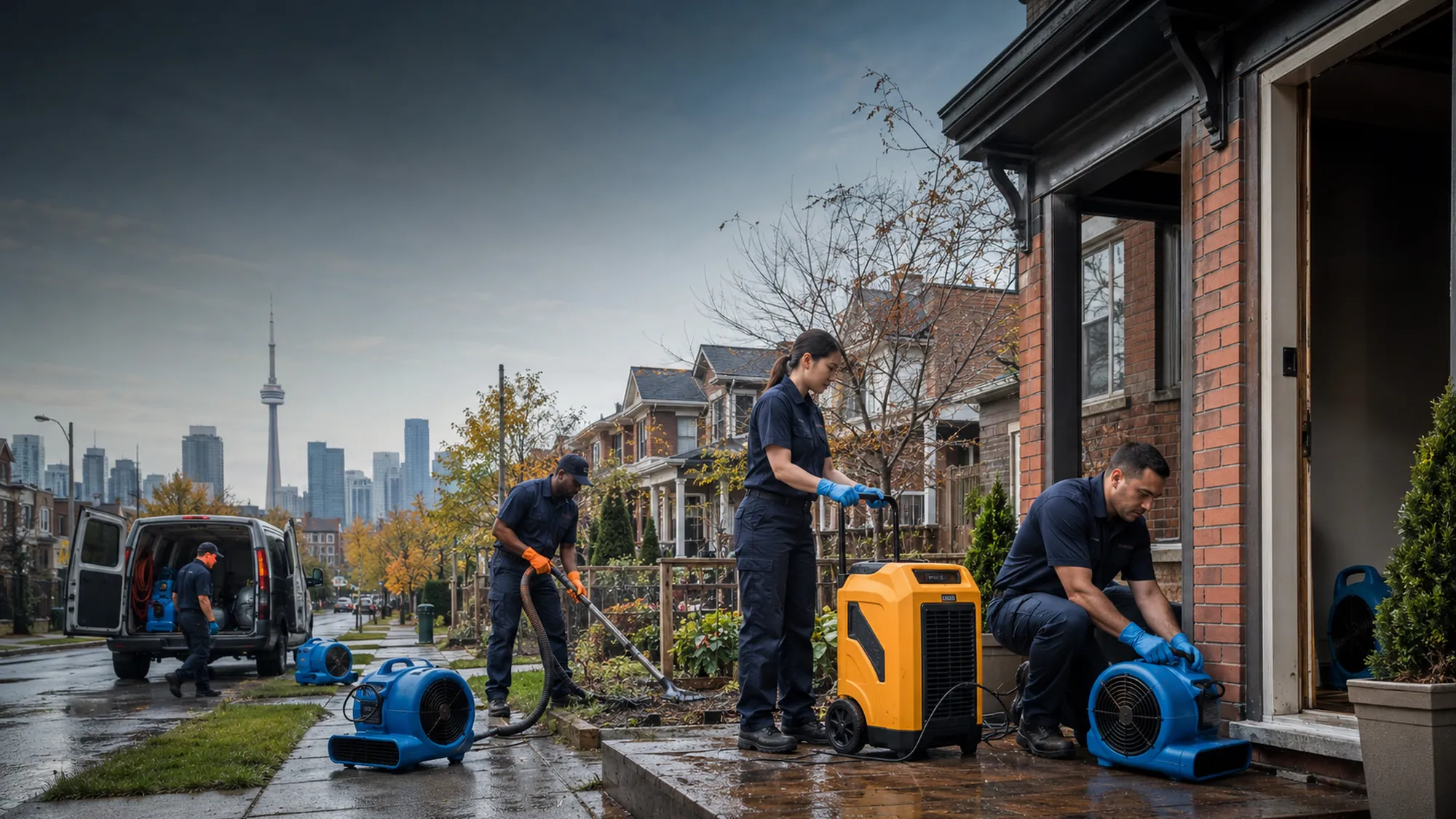
North York blends post-war bungalows on aging plumbing in areas like Willowdale and Don Mills with high-rise condo towers along the Yonge corridor, and ravine-adjacent homes near the Don Valley add real basement-flooding risk.
Every job starts with finding the moisture source, because removal without correction is temporary. We use moisture meters and thermal imaging to trace it, then handle the repair and the remediation under one contract so nobody is left arguing about whose job the leak was.
- Moisture tracing & thermal imaging
- Negative-air HEPA containment
- Black mold & toxic mold removal
- Attic & crawl space remediation
- Documented remediation, start to finish
Why North York homes grow mould
The postwar housing stock here is the issue: original insulation, limited attic ventilation, and finished basements added decades after the build, which traps moisture against framing that was never detailed to dry out.
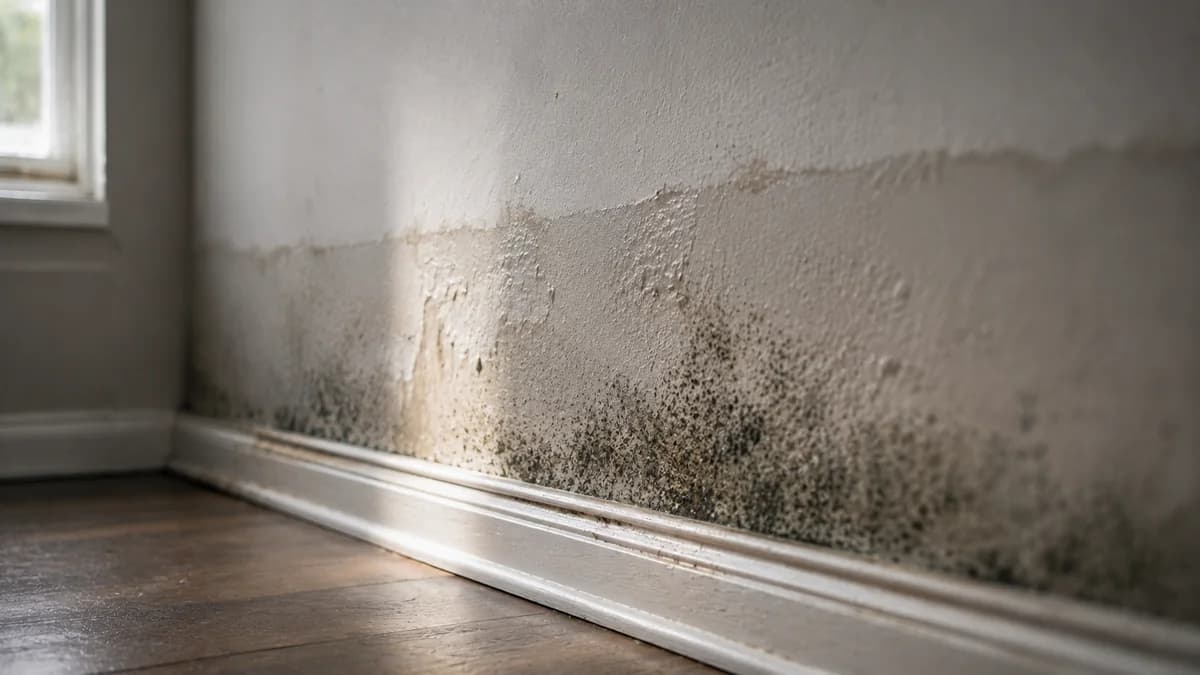
Mould needs three things: moisture, an organic material to feed on, and time. Drywall, wood framing, and insulation supply the second, and any North York home has plenty of it. That means moisture is the only variable you can control, and finding its source is the whole job. Remove mould without fixing what is feeding it and it comes back in the same place.
| Where it grows | Usual moisture source |
|---|---|
| Behind finished basement walls | Foundation seepage, past flooding, or an unnoticed plumbing leak |
| Attic sheathing | Condensation from warm indoor air meeting a cold roof deck, usually a ventilation problem |
| Under flooring and subfloor | A spill or leak that was surface-dried but never dried inside the structure |
| Bathroom and laundry walls | Extraction fans that vent poorly, run too briefly, or vent into the attic |
| Around windows and exterior corners | Thermal bridging and condensation, worst in winter |
The warning signs that come before you see it
A persistent musty smell with nothing visible is the single most reliable indicator, because your nose detects the compounds mould releases long before growth reaches a surface. Symptoms that improve when you leave the house, unexplained staining, peeling paint, and warped trim are the others. Our guide to spotting hidden mould covers what to look for room by room.
What remediation involves in a North York home
The word people reach for is cleaning, and that is the problem. Scrubbing a surface removes what you can see and leaves the colony inside the material, while pushing spores into the rest of the house. Bleach is the worst offender here: on anything porous it bleaches the stain and leaves the growth.
Done properly, the area is sealed off first and put under negative air pressure with HEPA filtration so nothing travels while work is underway. Colonized material is removed rather than treated. What stays is HEPA-vacuumed and treated. Then the moisture source gets fixed, which is the part that determines whether it comes back.
The last step is proof. Full documentation of the removal, the materials replaced, and the moisture repair gives you a record rather than an opinion, which matters when there is a sale, a tenant, or an insurer involved.
- Moisture mapping and thermal imaging to find the source, not just the growth
- Sealed containment with negative air pressure and HEPA filtration
- Controlled removal of colonized porous materials
- HEPA vacuuming and antimicrobial treatment of what remains
- Correction of the moisture source that caused it
- Complete documentation of the removal and moisture repair
What it costs and whether insurance covers it
Cost tracks the area affected, how much material has to come out, and how hard the moisture source is to reach. A contained bathroom wall is a very different job from an attic or a whole finished basement, so we quote from an on-site inspection rather than over the phone.
Coverage follows the cause. Mould resulting from a sudden covered loss, a burst pipe or a failed appliance, is often covered as part of that claim. Mould from a long-term leak or chronic humidity you did not address is usually excluded as a maintenance issue. Our guide to what home insurance covers for water damage in Ontario explains where that line falls.
That distinction is exactly why speed matters. Dealing with a leak immediately does not just limit the damage, it protects your ability to claim, because delay is what converts a covered event into an excluded one.
Property Emergency? Don't Wait.
Secondary damage starts within hours. Our certified crews are on call 24/7 across the GTA.
Why Choose Us
Why North York trusts Restoration Services GTA
24/7 Emergency Response
Crews on call around the clock, typically on-site within the hour.
IICRC-Certified Crews
Trained, certified technicians working to industry standards.
Direct Insurance Billing
We document the loss and bill your carrier directly.
One Team, Start to Finish
Mitigation through full reconstruction under one roof.
Our Google Rating
Restoration Services GTA: 5.0 / 5 from 3 Google reviewsBusiness-wide rating across all services.
Frequently Asked Questions
How much does mould removal cost in North York?
It depends on the affected area, how much colonized material has to be removed, and how accessible the moisture source is. A contained bathroom wall is a small job; an attic or a full finished basement is not. We inspect on-site and quote from site conditions, rather than guessing over the phone.
Is the mould in my North York home dangerous?
Any significant indoor growth is worth removing. Common reactions are respiratory irritation, congestion, coughing, headaches, and worsened asthma, and people with allergies, asthma, or compromised immunity react more strongly. Rather than trying to identify a species by eye, treat visible growth or a persistent musty smell as a reason to inspect.
Do I need a mould test in North York, or just removal?
If you can already see it, testing rarely changes what has to happen: it still has to come out and the moisture source still has to be fixed. When you smell mould but cannot find it, our on-site inspection traces it with moisture meters and thermal imaging instead. If you want independent lab results for a sale or a dispute, book them with a third-party testing company; we handle the remediation side and document everything we remove and repair.
Can I remove mould myself?
A small patch on a hard, non-porous surface, yes. Anything beyond roughly a square metre, anything on drywall or insulation, and anything you cannot trace to a fixed moisture source needs containment and negative air, otherwise cleaning it spreads spores through the rest of the house. Bleach does not work on porous materials, it only lightens what you can see.
How long does mould remediation take in North York?
A contained single-room job is often one to three days including setup and teardown. Larger areas, attics, and jobs needing reconstruction run longer. We give you a realistic schedule after the inspection.
Do you offer mold removal, mold restoration, and black mold removal in North York?
Yes, and they all describe the same certified process: contain the area, remove what has been colonized, treat what remains, fix the moisture source, and document the work. Mold removal, mold remediation, mold restoration, and [black mold removal](/mold-removal/black-mold-removal) in North York are the same job under different names, and both the "mold" and "mould" spellings refer to the same thing. We cover Willowdale, Don Mills, Bayview Village, and Hoggs Hollow and the rest of North York.
More Restoration Services in North York
One certified team for every property emergency in North York.
Mold Remediation Nearby
We provide the same mold remediation across the Toronto. Explore nearby communities:
NEED MOLD REMEDIATION IN NORTH YORK?
Certified Toronto crews are on call 24/7, on-site within the hour, billed directly to your insurer.