
 Mold
MoldMost mould problems start out of sight, behind walls, under floors, and in the attic. Learn the warning signs that point to hidden mould before it becomes a health hazard.
In This Article
The mould you can't see is the bigger problem
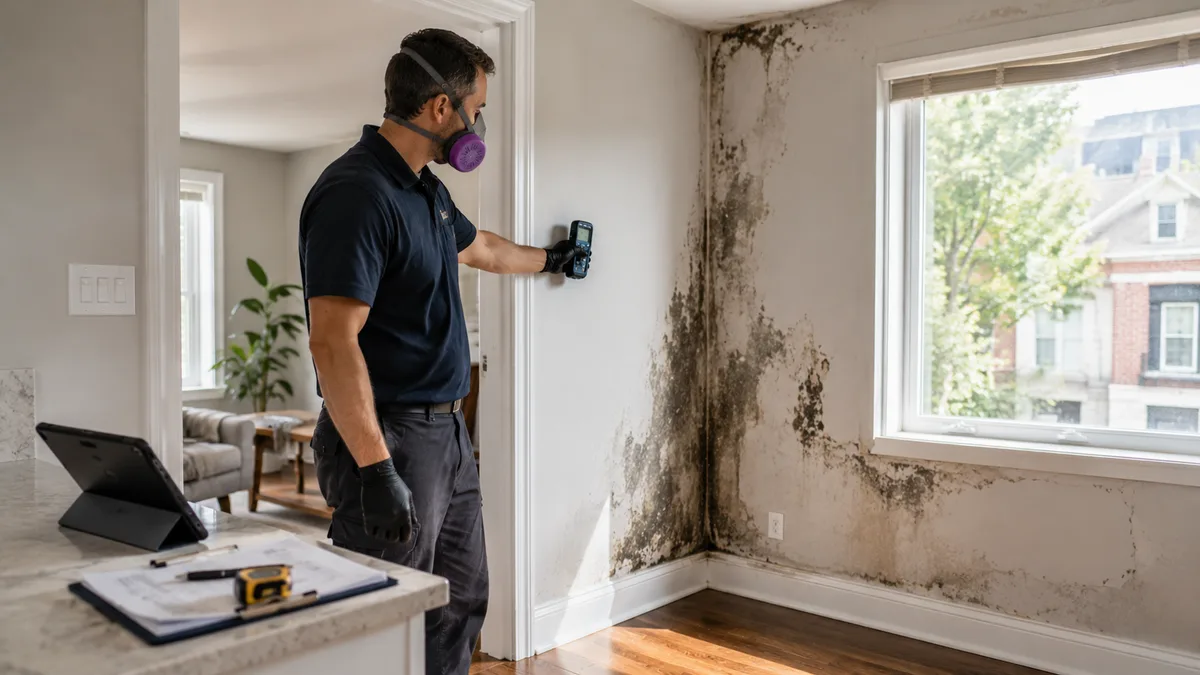
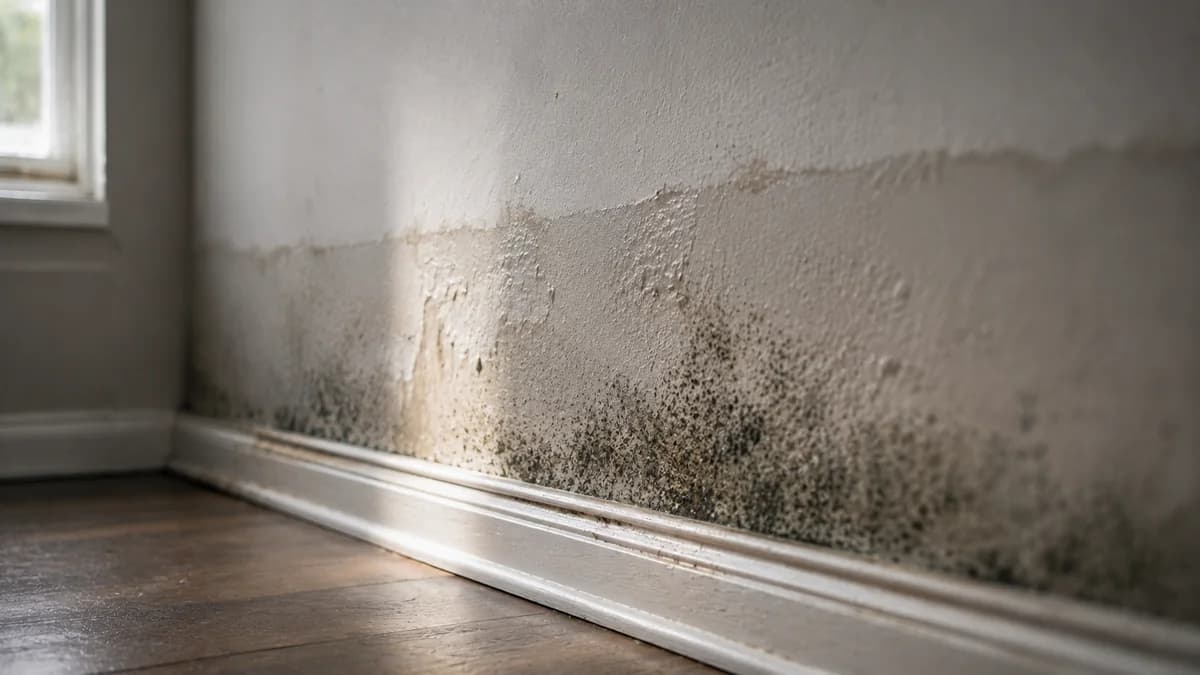
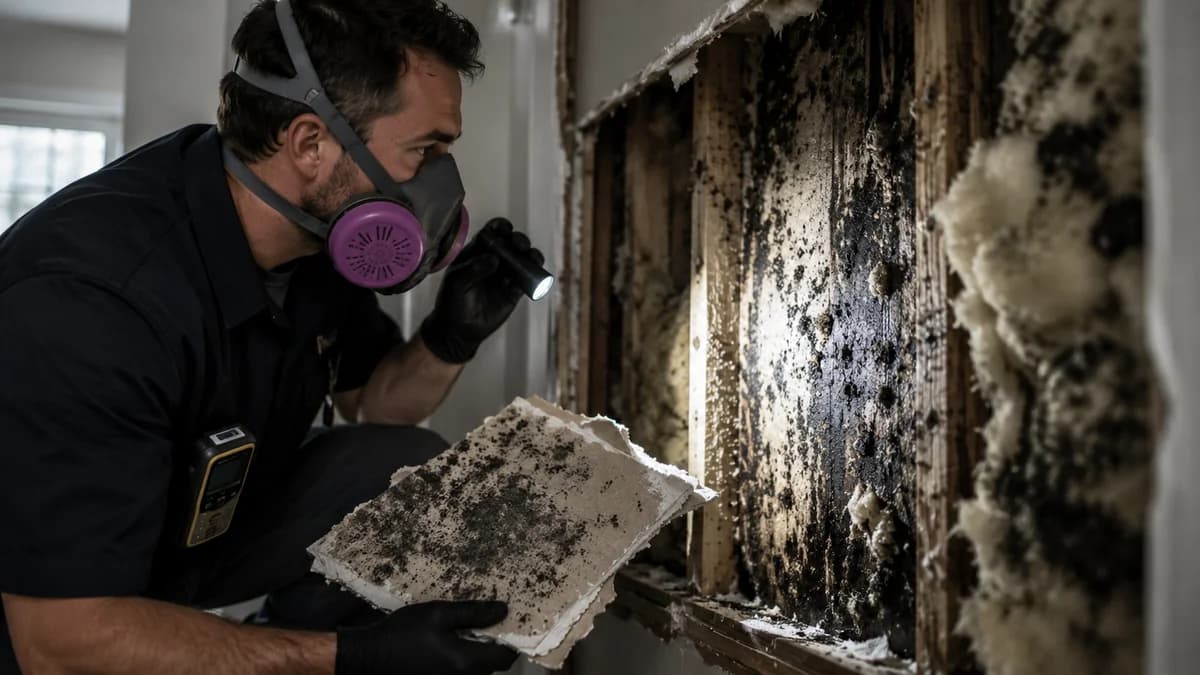
By the time mould is visible on a wall, there is usually far more of it growing where you cannot see, inside wall cavities, under flooring, in the attic, and behind baseboards. In the Greater Toronto Area's older homes, finished basements, and humid summers, hidden mould is one of the most common indoor air-quality issues we handle with professional mould removal.
Mould matters for two reasons: your health and your home's value. It releases microscopic spores into the air you breathe, and it quietly degrades the materials it grows on. It is also a frequent deal-breaker during home inspections and sales. Catching it early, before it spreads behind your finishes, saves you money and protects your family.
Because hidden mould rarely announces itself, you have to know the indirect warning signs. Here is what to watch for and when to bring in a professional.
| Warning Sign | What It Usually Means |
|---|---|
| A persistent musty smell | Active mould growing somewhere out of sight |
| Past water damage or leaks | A strong chance mould followed if it wasn't dried fast |
| Symptoms that ease when you leave home | An indoor air-quality problem, often mould |
| High humidity or condensation | The damp conditions mould needs to take hold |
What mould needs to grow
Mould is not random. It needs three things, and if you understand them you can predict where it will appear and cut off its supply.
- Moisture from a leak, flood, condensation, or high humidity
- An organic food source such as drywall, wood, insulation, carpet, or dust
- Time, as little as 24 to 48 hours in the right conditions
Moisture is the one you can control
You cannot remove the drywall and wood from your house, and you cannot stop time, but you can control moisture. That is why every legitimate mould remediation starts by finding and fixing the water source. Remove the moisture and you remove mould's ability to come back.
1. A persistent musty smell
An earthy, musty odour that lingers even after cleaning is one of the most reliable signs of hidden mould. The smell is produced by mould as it grows and releases compounds into the air, so a room that always smells damp, especially a basement, bathroom, or closet, deserves a closer look even if nothing is visible.
If the smell gets stronger in humid weather or after rain, that is an even clearer signal that moisture is feeding active growth somewhere out of sight.
2. Past water damage or leaks
Mould needs moisture, so anywhere water has been is a prime suspect. If you have had a leak, a flood, or long-term water damage, assume mould is possible until proven otherwise, particularly if the area was not dried quickly and professionally.
- Water stains or discolouration on ceilings and walls
- Bubbling, peeling, or cracking paint and wallpaper
- Warped or swollen drywall, baseboards, or flooring
- A history of basement flooding, roof leaks, or plumbing failures
3. Unexplained health symptoms
Sometimes your body notices mould before your eyes do. Mould exposure affects everyone differently, but a telltale pattern is symptoms that improve when you leave the house and return when you come back.
- Worsening allergies, congestion, or sneezing indoors
- Coughing, throat irritation, or asthma flare-ups
- Itchy eyes or skin that eases when you leave the home
- Greater effects on children, seniors, and anyone with respiratory conditions
4. High humidity and condensation
Indoor humidity above roughly 60 percent creates ideal conditions for mould. Frequent condensation on windows, a clammy feeling in the basement, or a humidifier running constantly can all point to a moisture problem that mould will eventually exploit.
A simple, inexpensive hygrometer lets you monitor indoor humidity. Keeping it between 30 and 50 percent is one of the easiest ways to make your home inhospitable to mould.
Why DIY mould removal often fails
It is tempting to wipe mould with bleach or paint over a stain, but that does not remediate anything; it hides the problem while the colony keeps growing inside the material and the moisture source keeps feeding it. Worse, disturbing mould without containment sends spores throughout the rest of your home. This is especially true of toxic black mould, which should never be disturbed without proper containment.
Proper remediation removes mould from the materials it has colonized, controls the spread of spores during the work, and addresses the underlying moisture. That combination helps prevent mould from returning, and it is hard to achieve with store-bought sprays.
The health effects of mould exposure
Mould is not just a property problem; it is a health one, and that is the real reason hidden mould should never be ignored. As mould grows it releases spores and, in some cases, compounds that irritate the airways and trigger allergic reactions in sensitive people.
For most healthy adults, exposure causes allergy-like symptoms: congestion, sneezing, coughing, and irritated eyes, skin, or throat. For children, seniors, and anyone with asthma or a weakened immune system, the effects can be more serious and longer-lasting. Because the symptoms overlap with everyday colds and seasonal allergies, mould often goes unsuspected for months, which is exactly why the 'better when I leave the house' pattern is such a useful clue.
How professional mould remediation works
If inspection confirms a real mould problem, proper remediation follows a strict, verifiable process, not a quick wipe-down. Each step exists to remove the mould safely and stop it from coming back.
Containment and negative air
The work area is sealed off and kept under negative air pressure with HEPA filtration, so spores are captured rather than scattered through the rest of your home while the mould is disturbed.
Physical removal and cleaning
Contaminated porous materials are removed and disposed of, salvageable surfaces are HEPA-vacuumed and treated with antimicrobials, and the moisture source feeding the growth is addressed so it cannot simply return.
Documentation and final walkthrough
The job finishes with a final walkthrough and complete documentation of what was removed, what was repaired, and how the moisture source was fixed, the kind of record that protects you during a home sale or insurance claim.
How to keep mould from coming back
Removing mould is only half the battle; keeping it gone is the other. Because mould always comes back to the same conditions, the most durable protection is controlling moisture and airflow throughout your home.
Fix leaks the moment you find them, run bathroom and kitchen exhaust fans, and keep indoor humidity between 30 and 50 percent with a dehumidifier in damp areas like the basement. Make sure your attic and crawl spaces are properly ventilated, direct downspouts away from the foundation, and address any drainage issues that send water toward the house. None of these steps are expensive, and together they remove the moisture mould depends on.
When to get a professional inspection
Small surface mould on a hard, non-porous surface can sometimes be cleaned yourself. But if you smell mould without seeing it, have had water damage, or are noticing health symptoms, a professional inspection is the reliable way to find out what is really there and how far it has spread.
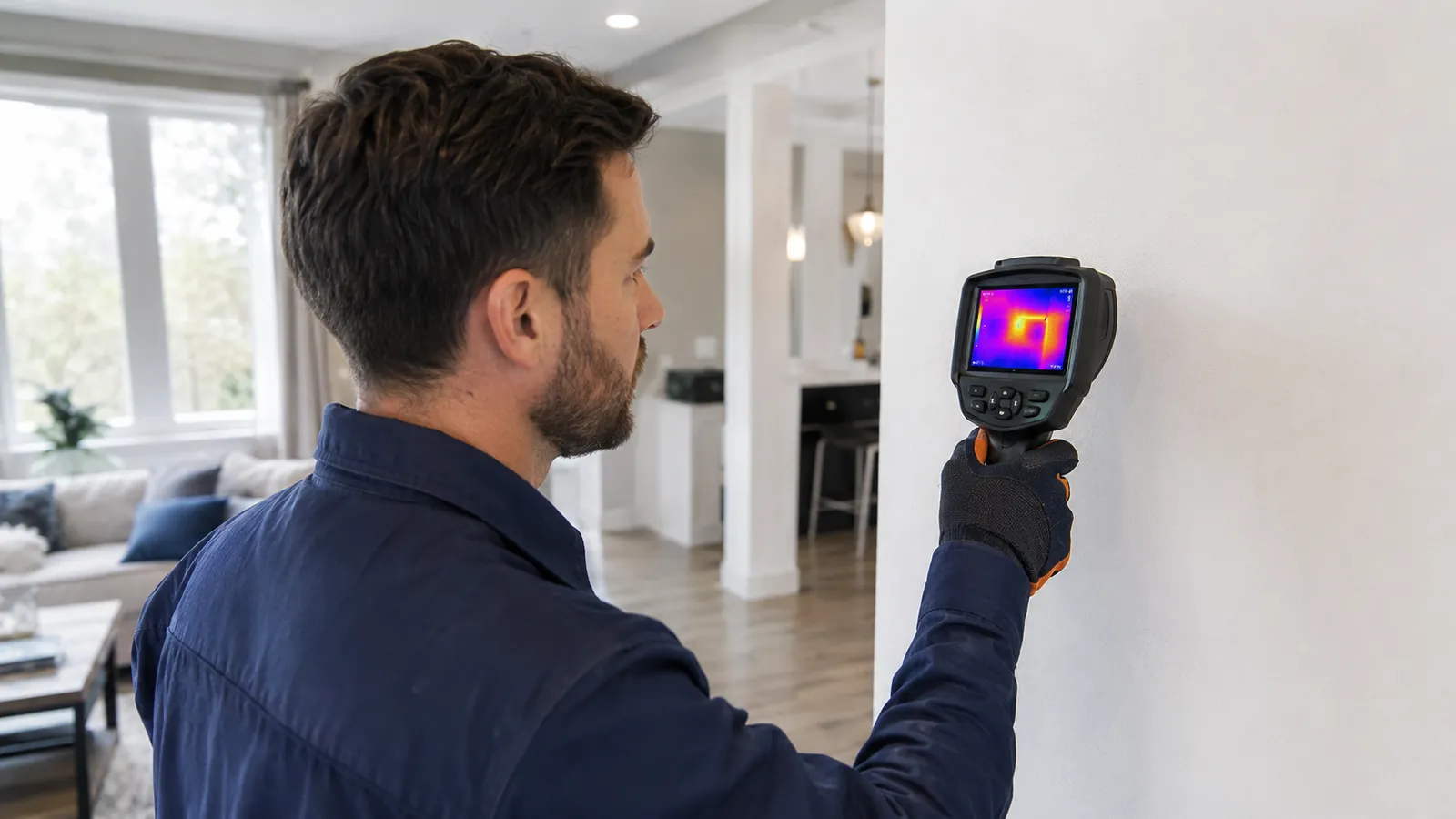
Restoration Services GTA provides certified mould inspection and removal across the Greater Toronto Area. We trace hidden growth with moisture meters and thermal imaging, find the moisture source feeding it, and if remediation is needed, remove it safely under negative-air containment. You finish with full documentation of what was found and what was done, not just a guess. Book a free inspection if the warning signs sound familiar.
Related Restoration Services
Restoration Crews Near You
We respond 24/7 across the Greater Toronto Area. Find your city:
About the Author
Restoration Services GTA
IICRC Certified Firm
Restoration Services GTA is an IICRC Certified Firm handling water, fire, mould, asbestos, and storm damage across the Greater Toronto Area. Our lead technicians carry Water Damage Restoration (WRT), Applied Structural Drying (ASD), and Fire & Smoke Restoration (FSRT) certifications, and every article here is written from live job experience across GTA properties.
- IICRC Certified Firm
- IHSA COR Certified
- WSIB Ontario Covered
- EACO Member